Hourly ↔ Annual
The conversion, and where overtime and unpaid weeks break it.
Multiply an hourly rate by 2,080 to get an annual salary. Divide an annual salary by 2,080 to get the hourly rate.
The quick mental version: halve the hourly rate and read it as thousands. $25 an hour is roughly $50k, $34 is roughly $68k. It is accurate to within about 4%.
Where 2,080 comes from, and what it assumes
Forty hours a week, fifty-two weeks a year. It is a convention rather than a measurement, and it embeds three assumptions that are often wrong.
Every week is paid. True for salaried employees, who are paid through holidays and leave. Not true for hourly workers without paid time off — two unpaid weeks turns 2,080 into 2,000 and $52,000 into $50,000.
No overtime. Where overtime is regular, the annual figure runs well above the conversion. Five overtime hours a week at time-and-a-half is worth 12.5% more time and about 19% more money.
Hours are actually forty. A salaried job that reliably runs fifty hours a week is paid for fifty and priced for forty. Converting it back at real hours worked is the only honest way to compare it with an hourly offer.
Pay frequency changes the cheque, not the year
Biweekly is every two weeks — 26 cheques, not 24. Twice a year a month contains three paydays, and budgeting monthly against two leaves those two months looking like a windfall when they are simply arithmetic.
Semi-monthly is twice a month on fixed dates — 24 cheques, with hours per cheque varying between 80 and 96 depending on the month.
Weekly is 52, most common in construction.
What arrives is not what is quoted
Federal income tax, Social Security at 6.2%, Medicare at 1.45%, and state income tax where it applies. On $52,000 that is roughly $8,000 to $11,000, leaving $41,000 to $44,000 before any health premium or retirement contribution.
Nine states levy no income tax, which is worth up to about $2,600 a year at that income — real, and usually smaller than the housing difference between the places being compared.
13 articles
$42.50 an hour at 35 hours a week is how much a year?
| A year42.5/hour × 35 hours × 52 weeks | $77,350 |
|---|---|
| A monthannual ÷ 12, not four weeks of pay | $6,446 |
| Every two weeks26 paychecks a year | $2,975 |
| A week | $1,488 |
| A day7 hours a day over five days | $298 |
| Hours worked a year35 × 52 | 1,820 |
| If unpaid time off48 paid weeks — $5,950 less than the headline figure | $71,400 |
| Same rate at 40 hours$11,050 more a year | $88,400 |
Notes
- $42.5 an hour at 35 hours a week is $77,350 a year before tax. The arithmetic is 42.5 × 35 × 52 — and the 52 is where most of the disagreement between calculators comes from.
- The 52 assumes you are paid for every week of the year. Salaried work usually is; hourly work often is not. Take two weeks of vacation and ten public holidays with no paid leave and you are paid for 48 weeks, which makes the real figure $71,400 — $5,950 lower. Neither number is wrong; they answer different questions, and which one applies to you is written in your offer letter, not in a calculator.
- A month is not four weeks. Four weekly paychecks is $5,950, but a year has 52 weeks rather than 48, so the true monthly average is $6,446. Paid every two weeks you get 26 cheques, and twice a year that means three cheques in one calendar month — the two months that make a budget look wrong in both directions.
- Overtime starts past 40 hours in a week, not past 80 in a fortnight, and it is paid at one and a half times the rate for non-exempt workers. At 35 hours there is none, but a single busy week crossing 40 triggers it.
- Before tax is roughly 22% above what lands, depending on the state. Federal income tax, Social Security at 6.2% and Medicare at 1.45% come out of every cheque regardless of where you live; state income tax swings the rest, from nothing in nine states to over 9% at the top in California and Oregon.
Hourly wage to annual salary by hours worked
1,572 calculations · browse all
- $10.00 an hour at 20 hours a week is how much a year?
- $11.00 an hour at 45 hours a week is how much a year?
- $12.50 an hour at 35 hours a week is how much a year?
- $14.00 an hour at 25 hours a week is how much a year?
- $15.00 an hour at 60 hours a week is how much a year?
- $16.50 an hour at 40 hours a week is how much a year?
- $18.00 an hour at 32 hours a week is how much a year?
- $19.50 an hour at 24 hours a week is how much a year?
- $20.50 an hour at 55 hours a week is how much a year?
- $22.00 an hour at 37.5 hours a week is how much a year?
- $23.50 an hour at 30 hours a week is how much a year?
- $25.00 an hour at 20 hours a week is how much a year?
- $26.00 an hour at 50 hours a week is how much a year?
- $27.50 an hour at 35 hours a week is how much a year?
- $29.00 an hour at 25 hours a week is how much a year?
- $30.00 an hour at 60 hours a week is how much a year?
- $31.50 an hour at 45 hours a week is how much a year?
- $33.00 an hour at 32 hours a week is how much a year?
- $34.50 an hour at 24 hours a week is how much a year?
- $35.50 an hour at 55 hours a week is how much a year?
- $37.00 an hour at 40 hours a week is how much a year?
- $38.50 an hour at 30 hours a week is how much a year?
- $40.00 an hour at 20 hours a week is how much a year?
- $41.00 an hour at 50 hours a week is how much a year?
- $42.50 an hour at 37.5 hours a week is how much a year?
- $44.00 an hour at 25 hours a week is how much a year?
- $45.00 an hour at 60 hours a week is how much a year?
- $46.50 an hour at 45 hours a week is how much a year?
- $48.00 an hour at 35 hours a week is how much a year?
- $49.50 an hour at 24 hours a week is how much a year?
- $50.50 an hour at 55 hours a week is how much a year?
- $52.00 an hour at 40 hours a week is how much a year?
- $53.50 an hour at 32 hours a week is how much a year?
- $55.00 an hour at 20 hours a week is how much a year?
- $56.00 an hour at 50 hours a week is how much a year?
- $57.50 an hour at 37.5 hours a week is how much a year?
- $59.00 an hour at 30 hours a week is how much a year?
- $60.00 an hour at 60 hours a week is how much a year?
- $61.50 an hour at 45 hours a week is how much a year?
- $63.00 an hour at 35 hours a week is how much a year?
- $64.50 an hour at 25 hours a week is how much a year?
- $65.50 an hour at 55 hours a week is how much a year?
- $67.00 an hour at 40 hours a week is how much a year?
- $68.50 an hour at 32 hours a week is how much a year?
- $70.00 an hour at 24 hours a week is how much a year?
- $71.00 an hour at 50 hours a week is how much a year?
- $72.50 an hour at 37.5 hours a week is how much a year?
- $74.00 an hour at 30 hours a week is how much a year?
Hourly wage by pay period
524 calculations · browse all
- $10.00 an hour is how much a month?
- $11.00 an hour is how much biweekly?
- $12.50 an hour is how much a week?
- $14.00 an hour is how much a month?
- $15.00 an hour is how much a day?
- $16.50 an hour is how much biweekly?
- $18.00 an hour is how much a week?
- $19.50 an hour is how much a month?
- $20.50 an hour is how much a day?
- $22.00 an hour is how much biweekly?
- $23.50 an hour is how much a week?
- $25.00 an hour is how much a month?
- $26.00 an hour is how much a day?
- $27.50 an hour is how much a week?
- $29.00 an hour is how much a month?
- $30.00 an hour is how much a day?
- $31.50 an hour is how much biweekly?
- $33.00 an hour is how much a week?
- $34.50 an hour is how much a month?
- $35.50 an hour is how much a day?
- $37.00 an hour is how much biweekly?
- $38.50 an hour is how much a week?
- $40.00 an hour is how much a month?
- $41.00 an hour is how much a day?
- $42.50 an hour is how much biweekly?
- $44.00 an hour is how much a month?
- $45.00 an hour is how much a day?
- $46.50 an hour is how much biweekly?
- $48.00 an hour is how much a week?
- $49.50 an hour is how much a month?
- $50.50 an hour is how much a day?
- $52.00 an hour is how much biweekly?
- $53.50 an hour is how much a week?
- $55.00 an hour is how much a month?
- $56.00 an hour is how much a day?
- $57.50 an hour is how much biweekly?
- $59.00 an hour is how much a week?
- $60.00 an hour is how much a day?
- $61.50 an hour is how much biweekly?
- $63.00 an hour is how much a week?
- $64.50 an hour is how much a month?
- $65.50 an hour is how much a day?
- $67.00 an hour is how much biweekly?
- $68.50 an hour is how much a week?
- $70.00 an hour is how much a month?
- $71.00 an hour is how much a day?
- $72.50 an hour is how much biweekly?
- $74.00 an hour is how much a week?
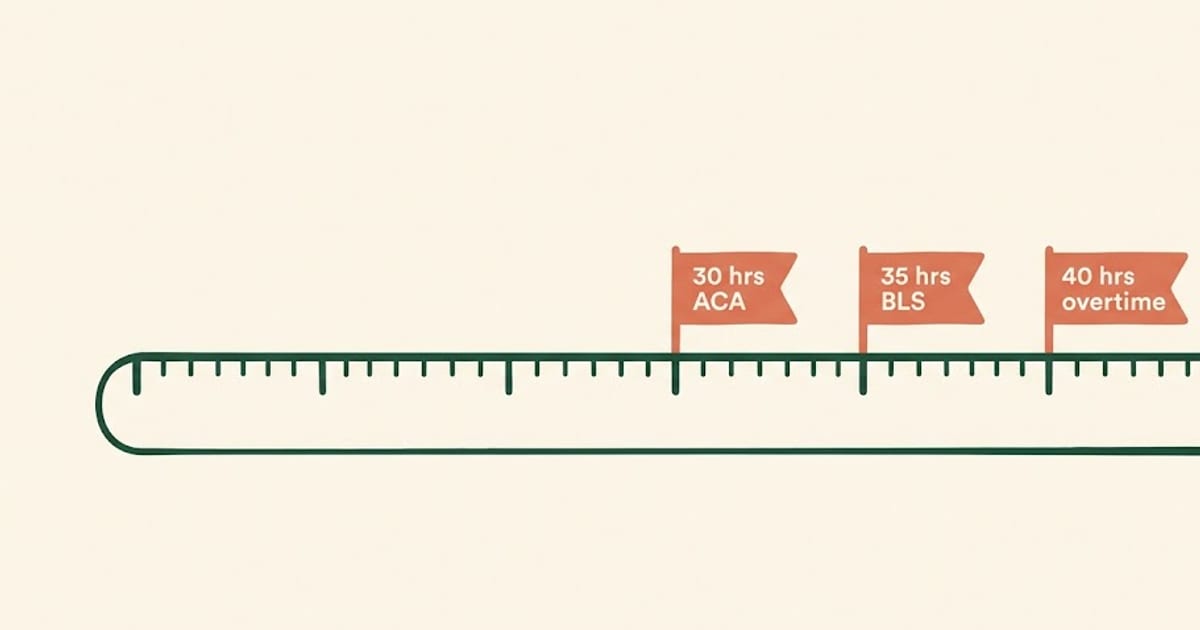 How Many Hours Is Full Time? 30, 35 or 40 Depending on Who Is Counting
There is no single legal definition of full-time work in the United States. Three numbers do most of the work: 30 hours for health coverage under the ACA, 35 for government statistics, and 40 for overtime.
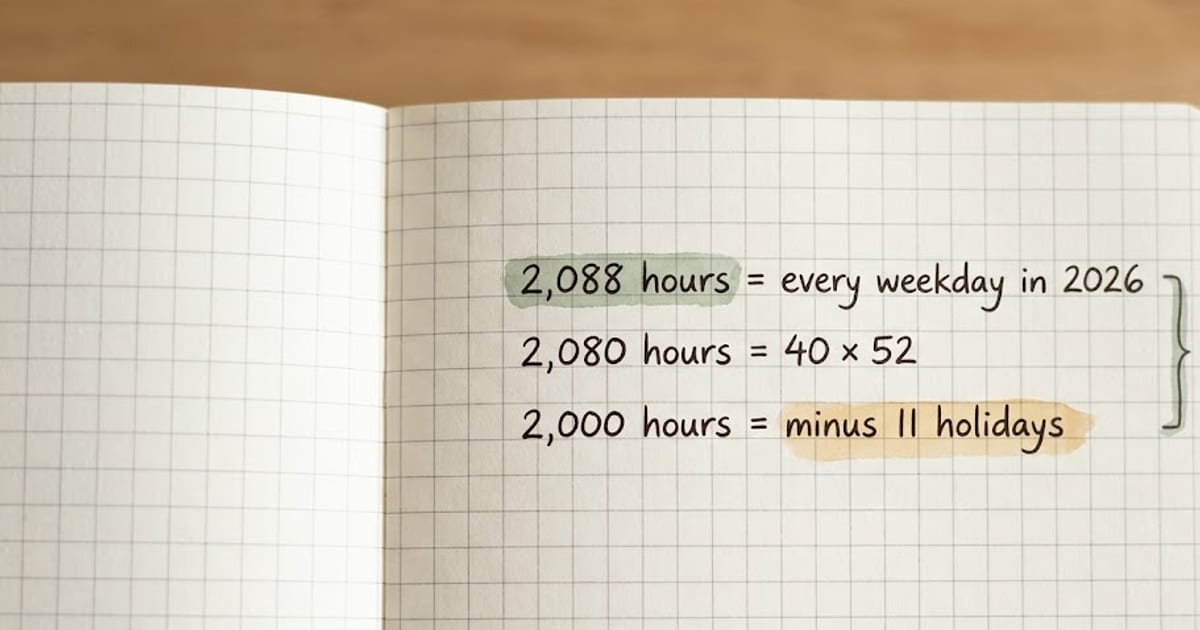 How Many Work Hours Are in a Year? 2,088 in 2026, 2,000 After Holidays
A full-time year is usually quoted as 2,080 hours. The calendar for 2026 actually holds 2,088, and the hours most people are at work come to about 2,000 once holidays are out.
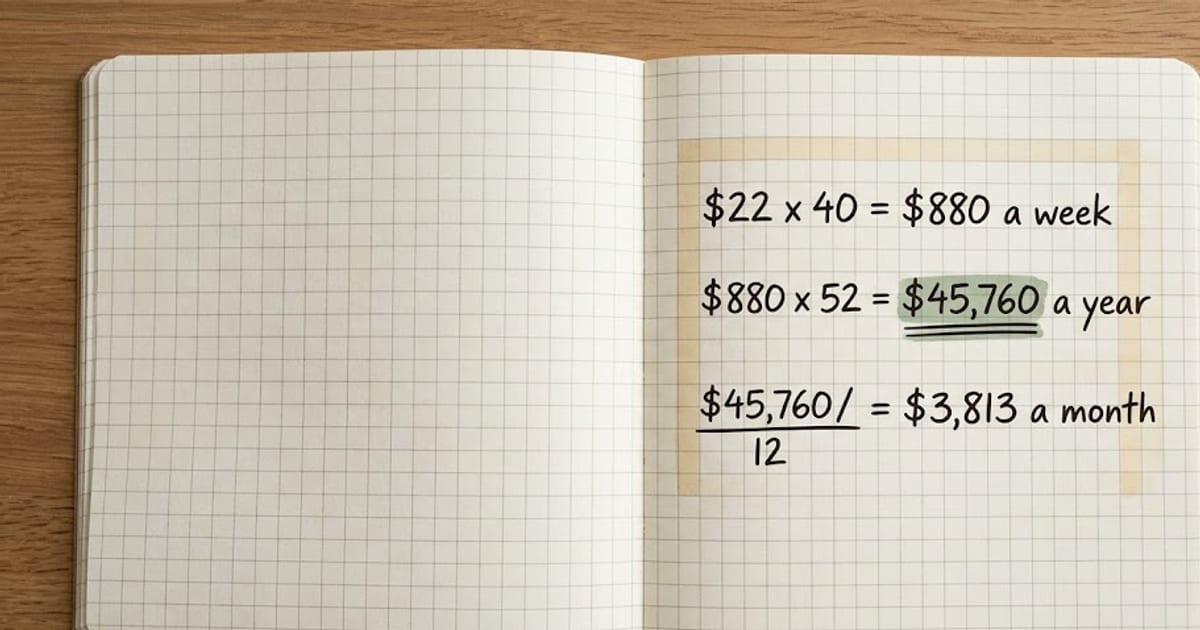 How to Calculate Annual Salary From an Hourly Rate (With the Shortcut and Its Error)
Hourly rate times weekly hours times 52 gives the annual figure. At 40 hours a week that means multiplying by 2,080. The mental shortcut most people use is 4% low, and overtime and unpaid weeks move the real number further.
 Is $20 an Hour Good? Better Than Most Entry Jobs, Below a Living Wage in 50 States
Twenty dollars an hour is a good wage for a first job and a thin one for a whole life. Here is where it ranks, which jobs pay it, and what it covers.
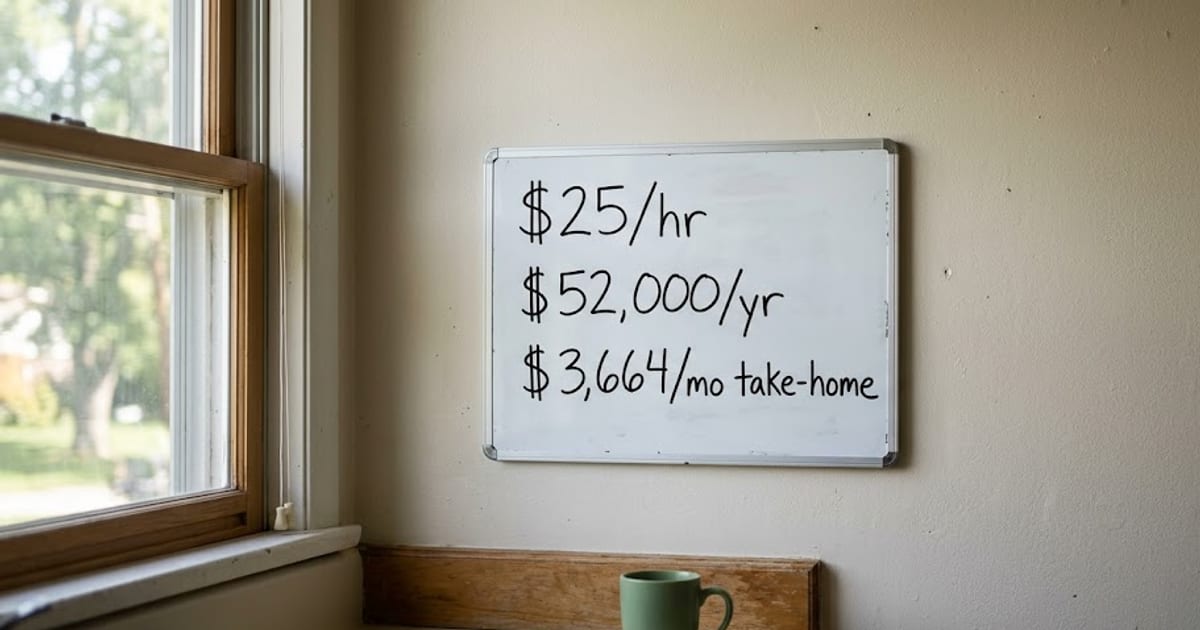 Is $25 an Hour Good? Above the Typical US Job, a Living Wage in 37 States
Twenty-five dollars an hour is where a wage stops being entry-level in most of the country. Here is how far it goes, where it falls short, and what overtime does to it.
 Can You Live on $20 an Hour? A Monthly Budget in Ohio, Texas and California
Full time at $20 an hour covers a bare budget for one person only with cheap rent or shared housing. Here is the month worked out line by line in three states.
 Hourly vs Salary: Which Pays More Once Hours, Overtime and Benefits Count
The better choice depends on how many hours the job really takes. Here is how to compare an hourly offer with a salary using the rules that decide overtime and the numbers that decide value.
 $40 an Hour Is $83,200 a Year — Before Anything Comes Out
The multiply-by-2080 answer is the easy part. The number that matters is what survives federal tax, FICA and whatever the state takes.
 $30 an Hour Is $62,400 a Year — About $49,000 After Tax
Sixty-two thousand four hundred. It is roughly the national mean for a carpenter, and comfortably above it for a roofer or a painter.
 How Overtime Pay Is Calculated: Time and a Half Over 40 Hours, With Examples
Federal law requires one and a half times the regular rate for every hour over 40 in a workweek. $20 an hour becomes $30, $25 becomes $37.50. The regular rate includes bonuses and shift differentials, and that is where most mistakes happen.
 How to Convert Salary to Hourly Rate: Divide by 2,080 — Then Divide by Real Hours
Divide by 2,080 and you get the advertised hourly equivalent. Divide by the hours actually worked and you get the real one, and the two are rarely close.
 $25 an Hour Is $52,000 a Year — Before Anything Comes Out of It
Multiply by 2,080 and you get $52,000. That number assumes forty hours a week, fifty-two weeks a year, and no unpaid day off — three assumptions worth pricing.