
Yes, but in most of the country only with low rent or a roommate. Full time at $20 an hour is $41,600 a year. After federal income tax, Social Security and Medicare a single filer takes home about $2,967 a month in a state without income tax, $2,908 in Ohio and $2,868 in California.
The MIT Living Wage Calculator prices a bare budget for one adult living alone: rent, food, health care, transportation, phone and internet, and other necessities, with no savings, eating out or travel. Against that budget, $20 an hour falls short by about $166 a month in Ohio, $269 in Texas and $1,417 in California. Sharing a two-bedroom apartment turns the Ohio and Texas budgets positive. In California it cuts the gap by about half.
What $20 an hour brings in
| Period | Gross | Take-home, Texas | Take-home, Ohio | Take-home, California |
|---|---|---|---|---|
| Week | $800 | $685 | $671 | $662 |
| Month | $3,467 | $2,967 | $2,908 | $2,868 |
| Year | $41,600 | $35,606 | $34,895 | $34,411 |
These figures are for a single filer taking the 2026 standard deduction, working 40 hours for all 52 weeks. Federal income tax is $2,812 a year and Social Security and Medicare $3,182. Health premiums and retirement contributions come out of the same paycheck and are counted below as costs. The take-home calculator for $20 an hour covers every state.
The month in Ohio
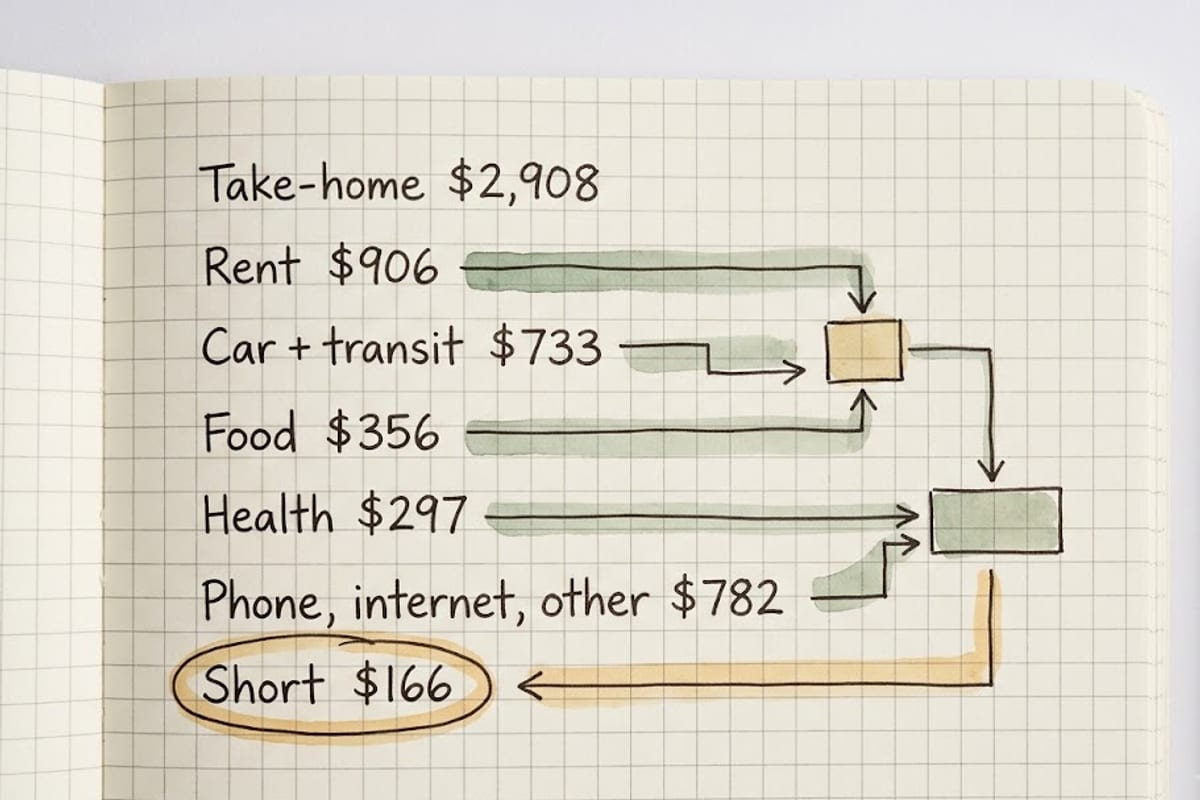
MIT's February 2026 budget for one adult in Ohio, converted to months:
| Ohio, one adult | Per month |
|---|---|
| Housing | $906 |
| Transportation | $733 |
| Other necessities (clothing, household, personal care) | $379 |
| Food | $356 |
| Medical, including premiums | $297 |
| Civic and community costs | $279 |
| Phone and internet | $124 |
| Basic budget | $3,074 |
| Take-home on $20 an hour | $2,908 |
| Difference | −$166 |
A $166 gap is small enough that ordinary choices close it: a car that is paid off, a prepaid phone plan and a basic internet tier, cooking nearly every meal. Even after it is closed, there is almost nothing left over, so one ordinary problem such as a $600 car repair goes straight onto a credit card.
The month in Texas
Texas has no state income tax, so take-home is higher, but rent is higher too. MIT's monthly housing figure for one adult in Texas is $1,223, against $906 in Ohio.
| Texas, one adult | Per month |
|---|---|
| Housing | $1,223 |
| Transportation | $751 |
| Other necessities | $339 |
| Food | $324 |
| Medical | $258 |
| Civic and community costs | $215 |
| Phone and internet | $126 |
| Basic budget | $3,236 |
| Take-home on $20 an hour | $2,967 |
| Difference | −$269 |
Almost the whole gap is rent. At the 30% guideline, $20 an hour supports $1,040 a month for housing, and the Texas state average is $183 above that. Rents below $1,040 are easier to find in smaller Texas cities than in the largest metros.
The month in California
MIT's California budget for one adult is $4,285 a month, of which $1,949 is housing. Take-home at $20 an hour is $2,868. The gap is $1,417 a month, which no amount of trimming food and phone bills can close. California's state minimum wage is well above the federal level, but a worker earning exactly $20 there is below a basic budget by a wide margin. In California, $20 an hour works as one of two incomes in a household, or with shared housing plus a second job.
The roommate calculation
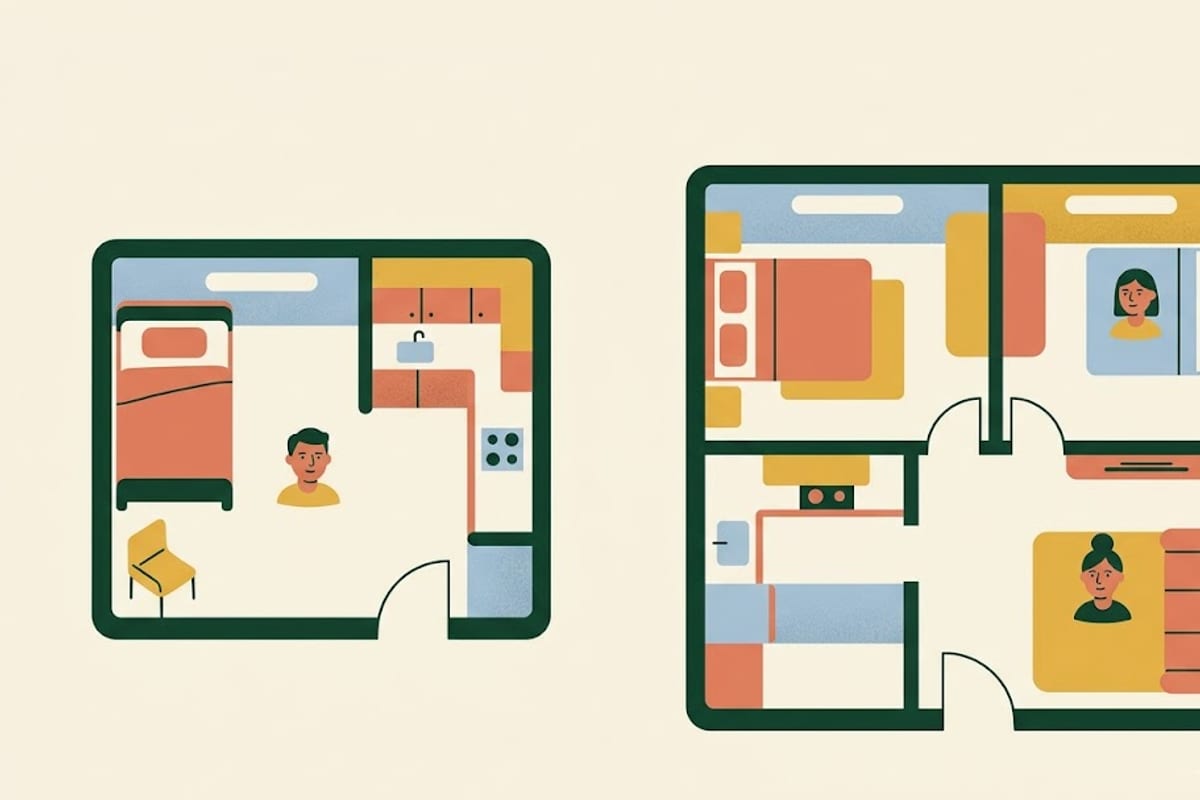
MIT's housing figure for one adult is based on a small unit for one person. Its figure for a household that needs two bedrooms, split between two roommates, gives a sense of what sharing saves:
| State | Living alone | Half of a two-bedroom | Monthly saving | Budget result on $20/hr |
|---|---|---|---|---|
| Ohio | $906 | $614 | $292 | +$126 |
| Texas | $1,223 | $768 | $455 | +$186 |
| California | $1,949 | $1,301 | $648 | −$769 |
In Ohio and Texas, sharing turns a monthly shortfall into a small surplus. That surplus is still thin: $126 to $186 a month is about $1,500 to $2,200 a year, enough to build a starter emergency fund slowly but not enough for a car replacement or a large medical bill.

Where $20 an hour covers rent on its own
The 30% guideline puts affordable housing at $1,040 a month on $20 an hour. MIT's monthly housing figure for one adult is at or below $1,040 in 20 states:
West Virginia ($748), South Dakota, Wyoming, Kentucky, Arkansas, North Dakota, Iowa, Alabama, Oklahoma, Mississippi, Louisiana, Kansas, Missouri, Ohio ($906), Nebraska, Wisconsin, Indiana, New Mexico, Michigan and Idaho ($1,030).
In those states the rent part of the budget works without a roommate. The rest of the budget may still run short, mainly because of transportation: MIT's car and transit line is $733 to $794 a month in the three states above, about a quarter of take-home pay. Living where a car is optional is the second largest saving after rent.
Where the rest of the money goes
Transportation. A single car payment, insurance and gas make up most of MIT's $733 to $794 a month. A reliable used car bought outright and a cheaper insurance policy can cut that by several hundred dollars.
Health care. MIT counts premiums and out-of-pocket costs at $258 to $297 a month for one adult. An employer plan with a low employee share keeps this lower; working for an employer without coverage and buying it separately usually costs more.
Taxes are already low. At $41,600, federal income tax is $2,812 a year, 6.8% of gross. Overtime can help: hours over 40 are paid at $30, and from 2025 through 2028 the extra $10 per overtime hour can be deducted from federal taxable income.
When the hours are not a full 40
All of the budgets above assume 40 paid hours every week of the year. Many jobs that pay $20 an hour do not guarantee that. At 32 hours a week the same rate brings in $2,773 a month gross instead of $3,467 at 40, and take-home in Texas falls to roughly $2,410, far below any of the three budgets. Two unpaid weeks a year remove about $1,600 before tax.
Overtime moves the other way. Five hours a week at time and a half adds $150 a week, or $7,800 a year before tax, which by itself covers the Ohio and Texas shortfalls. The overtime guide explains when employers must pay it, and $20 an hour is how much a year shows the effect of unpaid weeks.
A first-year plan on $20 an hour
For someone starting out at this wage in a lower-cost state, a workable order looks like this. Find shared housing or a unit at or below $1,040 before anything else, because rent is the one cost that is hard to change for a year once signed. Keep transportation to one inexpensive, reliable vehicle or none. Enroll in the employer's health plan if there is one, since buying coverage separately usually costs more at this income. Take any 401(k) match, even a small one, because it is additional pay. Then build an emergency fund of one month of expenses, roughly $3,000, before adding any new monthly payment.
On the Texas shared-housing budget above, the $186 monthly surplus reaches $3,000 in about 16 months. A raise to $22 an hour adds about $279 a month after tax and cuts that to about six and a half months, which is why the next step up in pay matters as much as the budget itself.
With a child
MIT's living wage for one adult with one child is at least $32.68 an hour in every state, starting with Mississippi, and above $35 in most. On $20 an hour a single parent's budget depends on public support: the Earned Income Tax Credit, the Child Tax Credit, Medicaid or CHIP for the child, SNAP, and childcare assistance where available. These are designed for households at this income, and a single parent on $20 an hour will usually qualify for several of them.
Frequently asked questions
Can one person live comfortably on $20 an hour? Not comfortably by MIT's standard in most states. It covers a bare budget in West Virginia and comes close in the lowest-cost states. Comfort, meaning regular saving and some spending on things beyond necessities, generally requires shared housing or a second income.
What rent can I afford on $20 an hour? About $1,040 a month under the 30% guideline. Under the common landlord test of gross income at least three times the rent, the ceiling is about $1,155. The rent guide covers both tests.
Is $20 an hour enough in 2026? It is above the median pay for many entry-level jobs and is typical for workers under 25. The ranking and the job comparisons are on is $20 an hour good.
Sources
- MIT Living Wage Calculator, state data updated February 15, 2026, typical expense tables for Ohio, Texas and California.
- IRS Revenue Procedure 2025-32; IRS guidance on the qualified overtime deduction.
- Take-home figures computed with 2026 federal brackets and each state's income tax rules.