
$30 an hour × 2,080 hours = $62,400 a year.
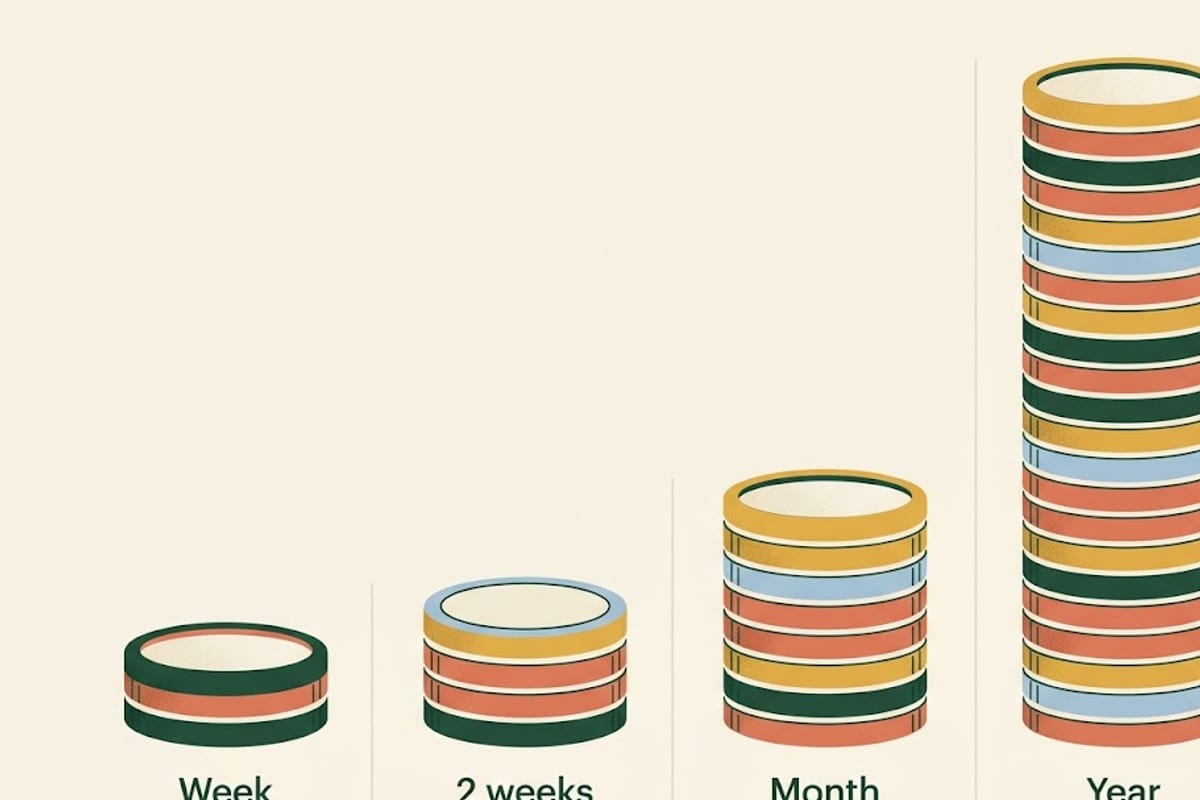
| Per year | $62,400 |
| Per month | $5,200 |
| Per two weeks | $2,400 |
| Per week | $1,200 |
| Per day (8 h) | $240 |
After tax
Single filer, no dependants, standard deduction:
| Annual | |
|---|---|
| Gross | $62,400 |
| Federal income tax | −$5,600 |
| Social Security (6.2%) | −$3,869 |
| Medicare (1.45%) | −$905 |
| State income tax | $0 to −$3,100 |
| Take-home | $48,900 to $52,000 |
About $4,075 to $4,335 a month before health premiums or retirement contributions, which commonly take another $200 to $600.
Where $30 an hour sits in the trades
| Trade | National mean, hourly |
|---|---|
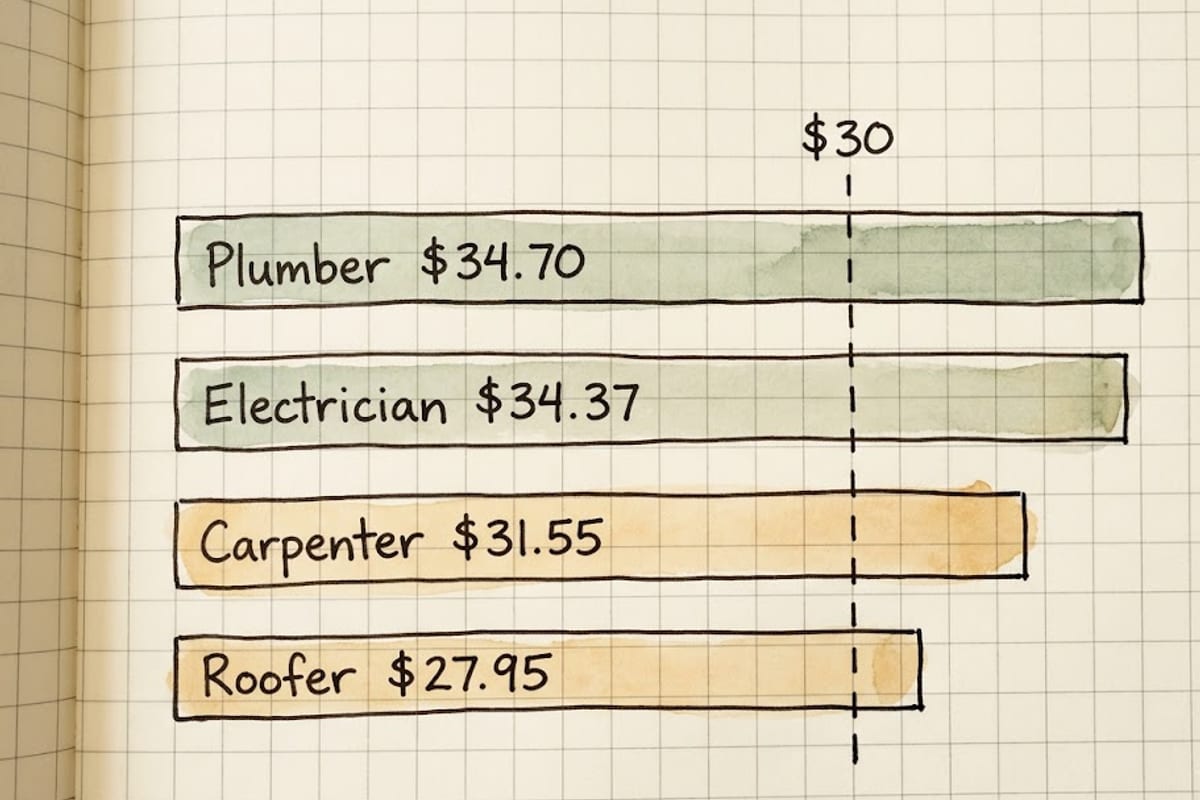
| Plumber | $34.70 |
| Electrician | $34.37 |
| Carpenter | $31.55 |
| HVAC technician | $31.14 |
| Drywall installer | $30.58 |
| Concrete finisher | $28.87 |
| Roofer | $27.95 |
| Painter | $26.64 |
$30 an hour is just below the national mean for carpenters and drywall installers, and comfortably above it for roofers, painters and insulation workers.
For a licensed journeyman plumber or electrician it is below the national mean, which makes it a number worth negotiating rather than accepting — particularly in a high-paying state, where the same licence commands $44 to $47.
The 2,080 assumption
Forty hours, fifty-two weeks. It holds for salaried employees paid through their leave and not for hourly workers without paid time off.
| Situation | Hours | Annual |
|---|---|---|
| Full year, paid leave | 2,080 | $62,400 |
| Two unpaid weeks | 2,000 | $60,000 |
| Four unpaid weeks | 1,920 | $57,600 |
| 45 h/week, 5 at time-and-a-half | 2,340 eq. | $70,200 |
| 50 h/week, 10 at time-and-a-half | 2,600 eq. | $78,000 |
Ten overtime hours a week is worth $15,600 a year at this rate. In trades where overtime is routine, that is the difference between the quoted rate and what people actually earn — and it is already inside the BLS annual means above, which is why those hourly conversions often read higher than an advertised base rate.
What a dollar an hour is worth
$2,080 a year before tax, roughly $1,650 after. Worth memorising, because raises are offered in one unit and budgeted in the other.
Going from $30 to $32 is $4,160 a year, about $275 a month take-home — a car payment. Going from $30 to $30.50 is $69 a month, which mostly disappears into rounding.
What it supports in housing
On the 30% rule, $62,400 gross supports about $1,560 a month in housing.
That is a one-bedroom in most of the country and a shared apartment in the handful of expensive coastal metros. It is also the point at which buying starts being possible: roughly $190,000 to $230,000 of home on a conventional loan at current rates with 10% down, with property tax in the state moving the answer by tens of thousands.
The rule assumes no unusual debt. A car payment or a student loan comes out of the same remainder, and a lender will measure the total rather than the housing line alone.
Against a salaried offer
A salaried role at $62,400 that reliably runs 50 hours a week is $24 an hour, not $30. Exempt salaried employees are owed nothing for hours past 40.
Convert backwards on real hours before comparing, and put benefits in the comparison — employer health contributions, a retirement match and paid leave commonly add 20 to 30% of salary in value and appear in neither number.
Other rates are on the conversion pages, and what the figure supports depends on where it is spent.