
30% of gross income, which is the convention nearly every rent calculator and most landlords use.
| Gross salary | 30% monthly | Annual rent |
|---|---|---|
| $40,000 | $1,000 | $12,000 |
| $52,000 | $1,300 | $15,600 |
| $60,000 | $1,500 | $18,000 |
| $75,000 | $1,875 | $22,500 |
| $90,000 | $2,250 | $27,000 |
| $110,000 | $2,750 | $33,000 |
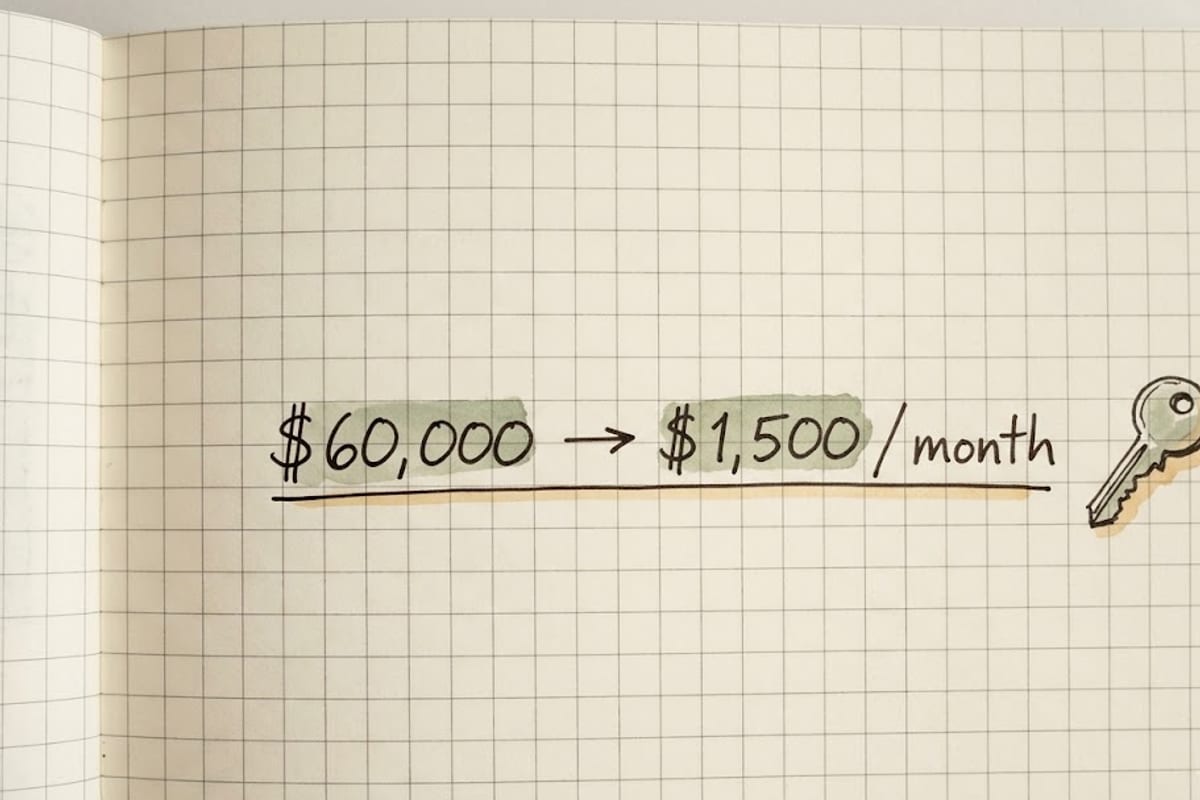
Reversed, it gives the salary a given rent requires: annual rent ÷ 0.30.
Where the rule came from
It is not derived from anything. The figure descends from a 1969 amendment to US housing law that capped public housing rent at 25% of income, later raised to 30%, and it drifted into general use as a rule of thumb.
That history matters because it means the number was a policy choice about subsidised housing, not a finding about household budgets. It has never been recalculated against actual costs, and rents have risen faster than wages for most of the period since.
Gross or take-home
Landlords and calculators use gross, because that is the number on a payslip and it is not affected by someone's tax situation.
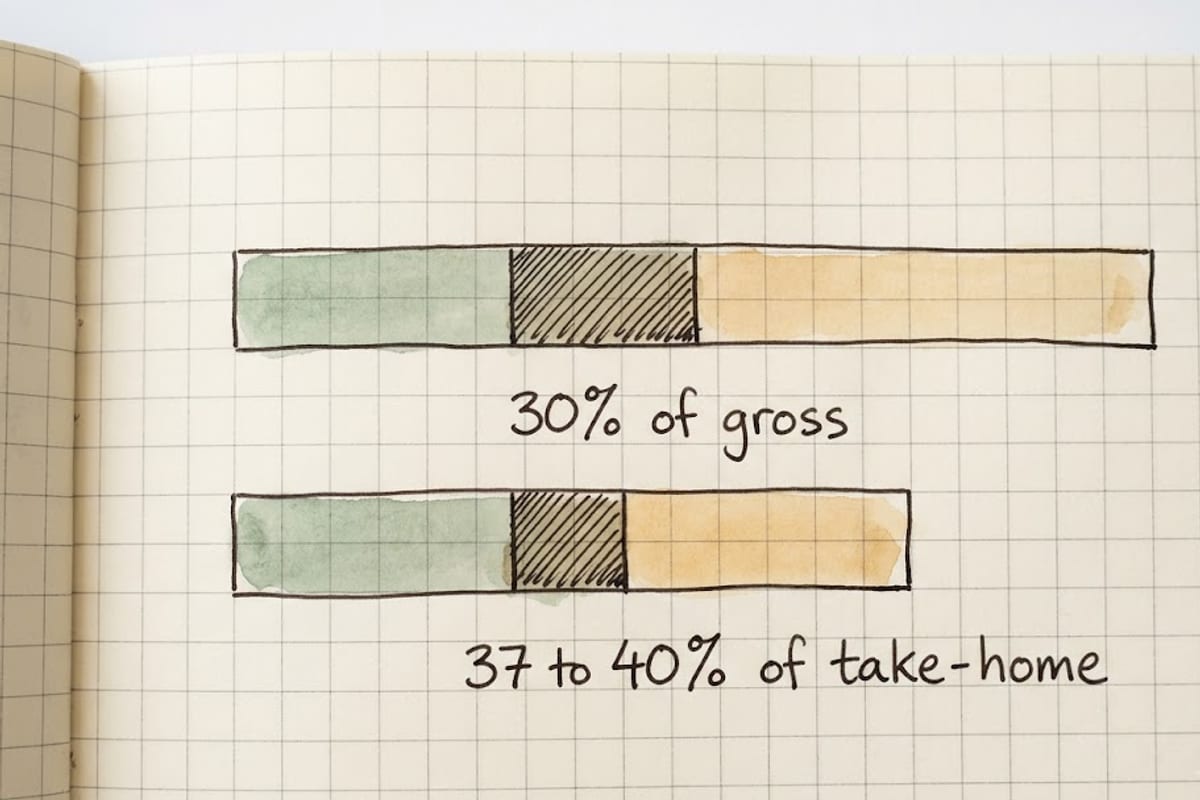
Thirty percent of gross is roughly 37 to 40% of take-home once federal, payroll and state tax are removed. Anyone budgeting from what actually arrives should use that figure rather than 30%, or they will consistently plan short.
Many landlords apply a stricter version: annual income must be 40× the monthly rent, which is 30% of gross expressed differently, or 3× the monthly rent in gross monthly income, which is 33%.
Where the rule breaks
It ignores other debt. A $450 car payment and a $300 student loan come out of the same remainder. Someone carrying both at $60,000 has far less room than the rule implies, and a mortgage lender will measure them on total debt rather than housing alone.
It ignores dependants. Childcare in most metros runs $800 to $2,000 a month per child, which is a second rent. The 30% rule describes a single person or a dual-income household and nothing else.
Some costs do not scale. At $200,000 a year, 30% leaves a great deal of room. At $30,000, the remaining 70% has to cover food, transport and utilities that cost roughly the same in dollars regardless of income. The rule is far more punishing at the bottom, and that is where it is applied most rigidly.
Some metros have no compliant option. In the most expensive coastal markets a median one-bedroom exceeds 30% of a median local salary. When the rule cannot be met, it stops being advice.
What to do when nothing fits
Share. The largest single lever available. A two-bedroom split two ways typically needs 40% less income per person than a one-bedroom alone — a bigger effect than any plausible raise or any state tax difference.
Trade commute for rent, and price the commute. An hour a day each way is ten hours a week. Valued at the hourly rate the job pays, that often exceeds the rent saved.
Accept a higher percentage deliberately, and know the cost. Living at 40 or 45% is common and survivable. What it removes is capacity for a broken car or a missed week of work, and that is where the financial stress in a household actually sits — not in the rent line itself.
The comparison between two cities that works is after tax and after housing, and what a given hourly rate supports is on the conversion pages.