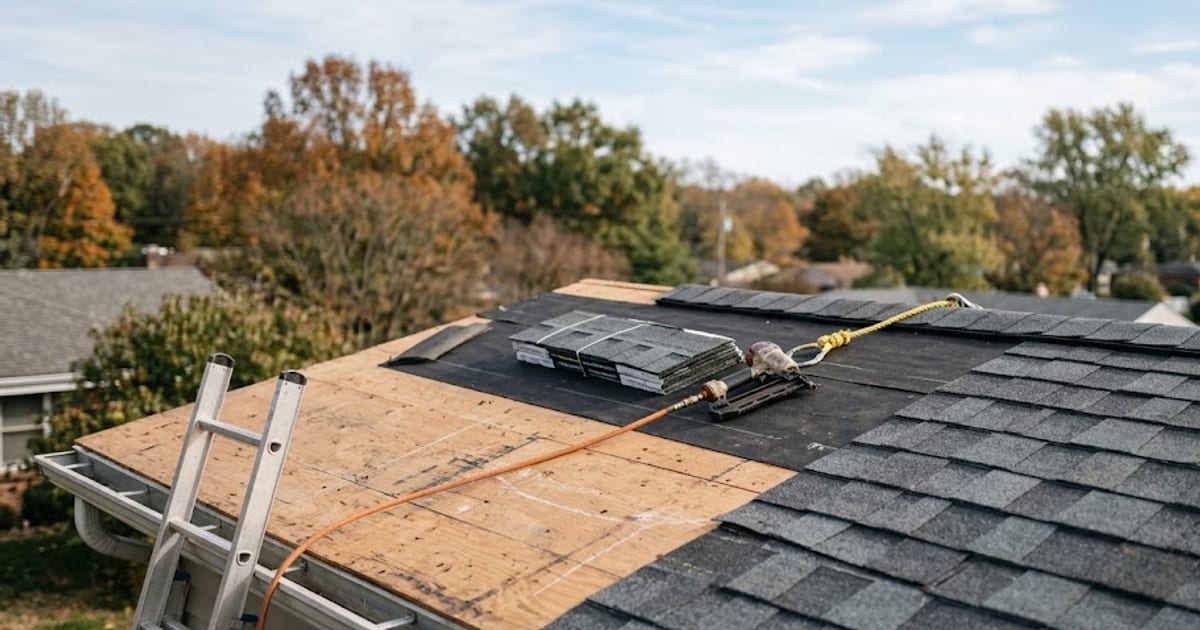
Roofers average $58,140 a year nationally — $27.95 an hour at 2,080 hours. Eighth of the twelve construction trades tracked here.
| State | Annual | Hourly | |
|---|---|---|---|
| Highest | Illinois | $77,650 | $37.33 |
| New Jersey | $74,380 | $35.76 | |
| Massachusetts | $72,990 | $35.09 | |
| Minnesota | $72,920 | $35.06 | |
| US mean | $58,140 | $27.95 | |
| Tennessee | $46,740 | $22.47 | |
| Arkansas | $45,780 | $22.01 | |
| Lowest | Mississippi | $45,280 | $21.77 |
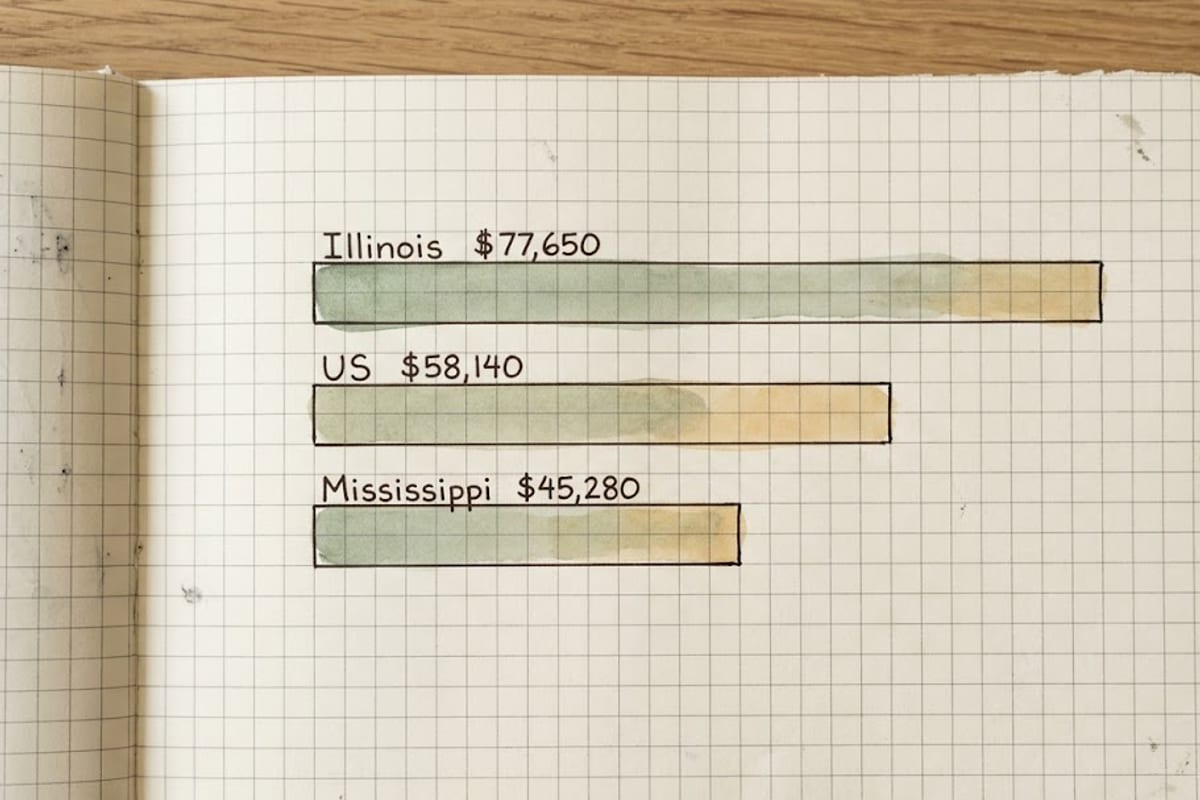
Illinois pays 71% more than Mississippi.
Why the mean is unusually misleading here
Three structural features make the published figure describe fewer actual roofers than in any other trade on this site.
Piece rate. Much of residential roofing is paid by the square — 100 square feet of finished roof — rather than by the hour. A fast crew on a straightforward gable roof out-earns the mean substantially; the same crew on a complex cut-up roof with multiple valleys earns less for the same days. The hourly conversion above is arithmetic rather than a rate anyone is quoted.
Seasonality. Roofing stops in the north. Snow, ice and cold make installation unsafe and adhesive strips fail to seal below about 40°F, so November to March is either travel to warmer states or no work at all. The annual mean quietly averages those months in, which is part of why the northern states at the top of the table pay so much per working day.

Storm work. A hailstorm or hurricane produces months of insurance-funded replacement in one region, and crews travel to it. That income is real, lumpy, and hard for an annual employer survey to capture.
Why Illinois and Minnesota, not Florida
The pattern here inverts the intuition that more roofing weather means more roofing money.
The northern states at the top — Illinois, New Jersey, Massachusetts, Minnesota — are strong union states with prevailing-wage rules on public work. The short season concentrates demand and gives crews leverage, and commercial flat-roof work over there is a unionised speciality that pays well above residential shingle work.
The southern states at the bottom have a twelve-month season, a large informal labour market, and right-to-work laws. More working days, lower rate per day, and the annual figures come out lower.
What separates the top of the trade
Commercial flat roofing — TPO, EPDM, modified bitumen — is a different trade from residential shingles and pays clearly better. It is also year-round in more climates.
Foreman and estimator roles move a roofer off the piece rate onto salary, and that is where the trade's career ladder actually goes. There is no licence to progress through the way plumbing has.
Running a crew. Most of the real income in residential roofing is on the contractor side, and BLS excludes the self-employed entirely — so the top of the trade is missing from the figure above.
The cost nobody puts in the wage
Roofing has among the highest injury rates in construction, and falls are the leading cause. Physical wear ends careers earlier here than in any other trade on this list — knees, backs and shoulders, from carrying bundles up ladders in heat.
That is a real part of the compensation question and it does not appear in a wage table. It is also why the sensible reading of these figures is as an early-career number with a plan to move toward commercial work, estimating or ownership rather than as a thirty-year rate.
Every state figure sits on its own page, and the full trade ranking puts roofing in context.