
| Trade | US mean | Per hour |
|---|---|---|
| Plumber, pipefitter, steamfitter | $72,170 | $34.70 |
| Electrician | $71,490 | $34.37 |
| Carpenter | $65,630 | $31.55 |
| HVAC technician | $64,780 | $31.14 |
| Drywall installer | $63,600 | $30.58 |
| Concrete finisher | $60,050 | $28.87 |
| Glazier | $59,720 | $28.71 |
| Roofer | $58,140 | $27.95 |
| Solar PV installer | $57,900 | $27.84 |
| Painter | $55,420 | $26.64 |
| Insulation worker | $54,740 | $26.32 |
| Septic tank servicer | $53,500 | $25.72 |
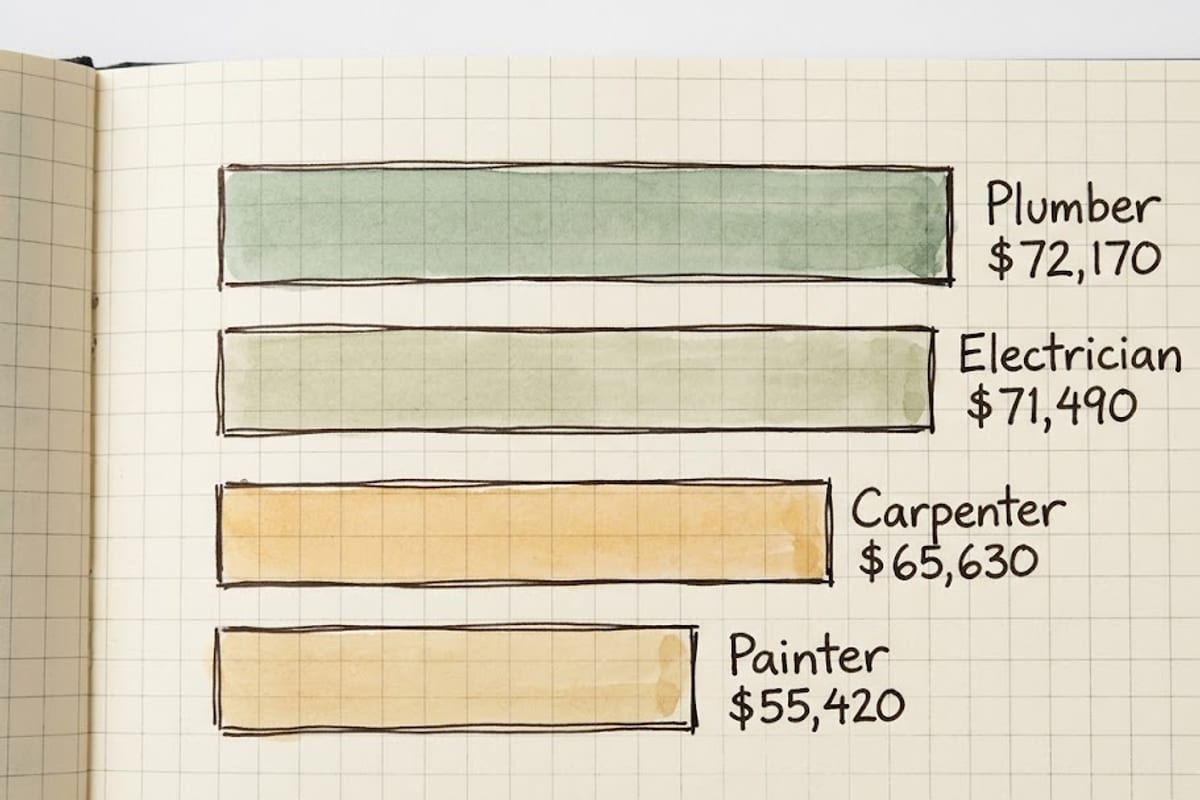
The national ranking is the least useful number here
The whole table spans $18,670 — from $53,500 to $72,170, a factor of 1.35.
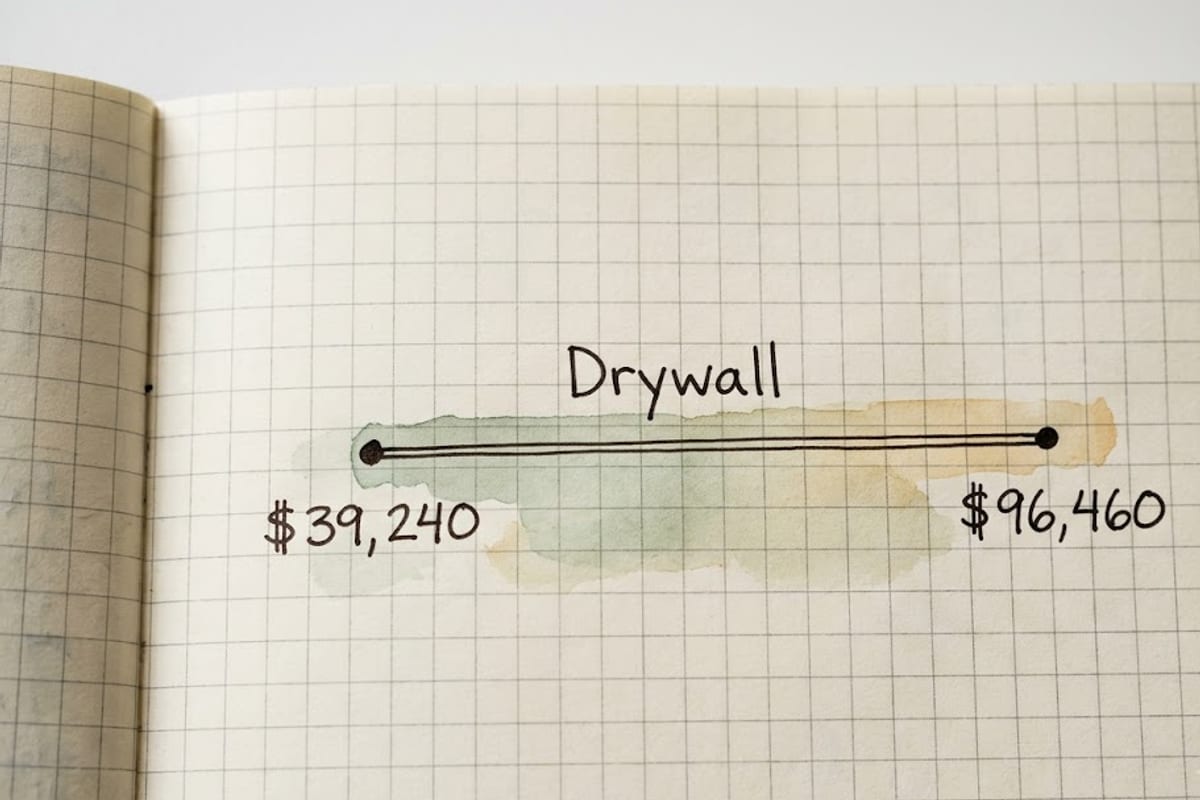
The spread inside a single trade across states is larger than that in every case. Drywall runs from $39,240 in Mississippi to $96,460 in Hawaii, a factor of 2.46. Glaziers span 2.31, concrete finishers 2.30.
| Trade | Lowest state | Highest state | Ratio |
|---|---|---|---|
| Drywall installer | $39,240 (MS) | $96,460 (HI) | 2.46× |
| Glazier | $39,410 (MS) | $90,890 (MA) | 2.31× |
| Concrete finisher | $43,470 (MS) | $100,010 (AK) | 2.30× |
| Plumber | $50,640 (AR) | $98,450 (OR) | 1.94× |
| Electrician | $53,470 (AR) | $99,750 (OR) | 1.87× |
| Solar installer | $47,420 (NC) | $78,690 (NJ) | 1.66× |
That means which state matters more than which trade for most of this list. A concrete finisher in Alaska out-earns an electrician in any state in the country.
What separates the top of the table from the bottom
Licensing. Plumbers and electricians are the two licensed trades on this list in most states, with formal apprenticeships and exams. That restricts supply and sets a floor. Nothing else here requires a state licence to practise as a journeyman.
Union density. The trades with strong national unions — electrical, plumbing, sheet metal — sit at the top. This is also why Oregon, Washington and Illinois lead so many state tables while several expensive states sit mid-pack.
Sector. Industrial and utility work pays above commercial, which pays above residential, in every trade here. A plumber on refinery work and a plumber on domestic call-outs share a job title and not much else.
Weather exposure. Roofers and concrete finishers are outdoors and season-bound. In the northern states that means travel or months off, and the annual mean quietly averages that in.
The lowest-paid entries deserve a caveat
Septic tank servicing and insulation sit at the bottom of the published table, and both are cases where BLS excluding the self-employed distorts the picture badly. Much of the real income in septic work is on the contractor side. Insulation splits between a low-paid residential batt trade and a much better-paid mechanical and industrial side, and the mean sits between them describing neither.
Solar PV installation is the newest entry and the one whose figure moves fastest, because the workforce is young and the installation base is still growing.
What none of these numbers include
Benefits. Union packages commonly add 25 to 35% in pension, health and training contributions on top of the wage, and none of it appears in a BLS mean.
Nor does the apprenticeship, which is four to five years of earning while training with no student debt at the end. That is the substance of the trades argument, and it does not show up in a single-year wage figure at all.
Individual trades have their own pages — see electricians — and every one of them is broken out by state.