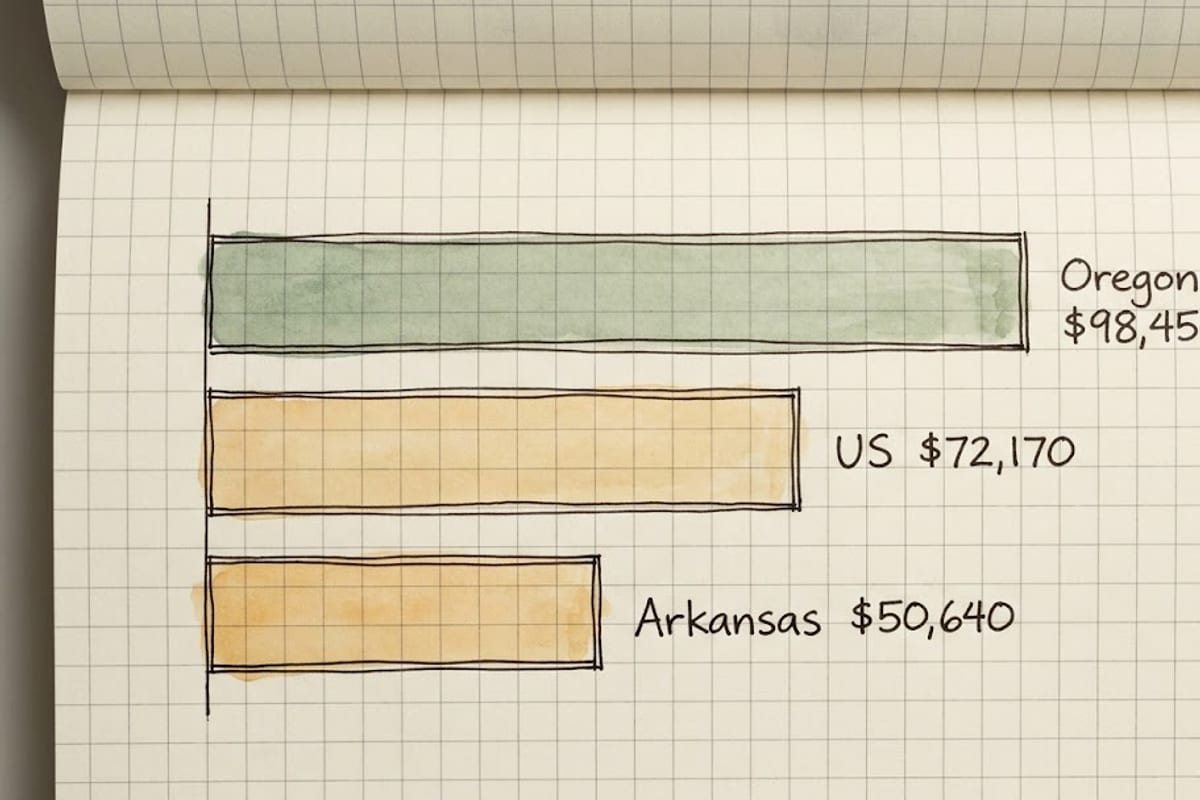
Plumbers, pipefitters and steamfitters average $72,170 a year in the United States — $34.70 an hour at 2,080 hours. That is the highest national mean of the twelve construction trades.
| State | Annual | Per hour | |
|---|---|---|---|
| Highest | Oregon | $98,450 | $47.33 |
| US mean | $72,170 | $34.70 | |
| Lowest | Arkansas | $50,640 | $24.35 |
Oregon pays 94% more than Arkansas for the same licensed trade.
The licence is what puts it at the top
Plumbing is one of two trades on this site licensed at state level almost everywhere — the other is electrical, and they occupy the top two places by national mean. That is not a coincidence.
A licence requires a formal apprenticeship, a documented number of hours, and an exam. That restricts how many people can legally do the work, and a restricted supply of licensed labour raises its price. Trades without a licensing gate have a wider labour pool and lower wages, and the correlation across this table is close to perfect.
| Stage | Typical duration | Pay |
|---|---|---|
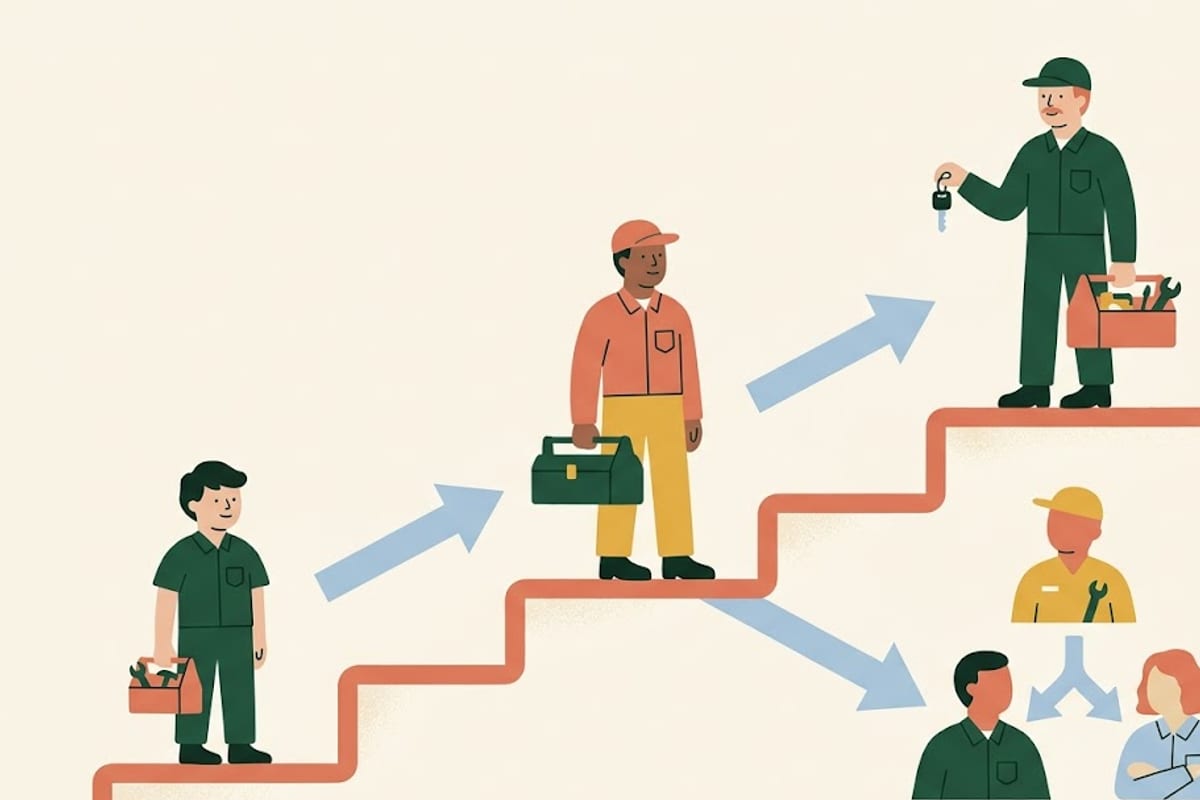
| Apprentice, year 1 | 1 yr | 40–50% of journeyman |
| Apprentice, years 2–5 | 4 yr | 55–85%, stepping annually |
| Journeyman | — | The figures above |
| Master | 2+ yr after journeyman | 15–25% above journeyman |
| Contractor | — | Business income, not wages |
The step to master licence is the largest single jump available, and in most states it is what allows you to pull permits and run your own work.
Three things the annual mean does not show
Service call premiums. Emergency and after-hours plumbing pays at overtime and callout rates. That income is inside the annual figure but invisible in a quoted base rate, which is why the hourly conversion here often reads above what a job advert offers.
The industrial split. Pipefitters and steamfitters are grouped with plumbers in this SOC code. Industrial pipefitting on refineries, power plants and process work pays substantially above residential plumbing, and the mean blends them.
The self-employed. BLS surveys employers. A large share of experienced plumbers run their own operation and are absent from the figure entirely — which understates the trade at its top end.
Why the state ranking is not a cost-of-living ranking
Oregon and Washington lead. Illinois and New Jersey sit high. Several genuinely expensive states sit mid-pack, and Texas — with enormous construction volume — sits well down.
The strongest pattern is union density and prevailing-wage law on publicly funded work. Where a legal wage floor exists on public projects, private employers compete against it, and the whole state average rises.
Right-to-work status correlates with the bottom of the table across every trade here, plumbing included.
Where the work actually is
The trade divides into three markets that share a licence and very little else.
Residential service is call-outs, repairs and replacements in occupied homes. Highest variety, most customer contact, and the sector where running your own operation pays best because the customer is paying retail rather than a general contractor.
New construction is rough-in and finish work on a schedule set by somebody else. Steadier, lower rate, and heavily exposed to the building cycle — this is the part of the trade that contracts first in a downturn.
Industrial and commercial pipefitting is process piping, steam systems, refineries and plants. Highest rate, most travel, and the sector where union scale and prevailing wage matter most. Welding certifications add a clear premium here and are worth little in residential work.
Someone deciding between apprenticeship programmes is really deciding between these three, and the choice is harder to reverse later than it looks — the certifications and the contact network are sector-specific.
What it costs to get in
Nothing, in tuition terms, and that is the argument. A plumbing apprenticeship is paid from the first day, runs four to five years, and ends with a licence and no debt.
The trade-off is physical: knees, shoulders and backs, in crawl spaces and trenches. It is a career with a real wear curve, and the people who stay in it longest usually move toward service, estimating or running crews rather than staying on tools.
Every state figure for this trade is on its own page, and the full trade ranking puts it in context.