
HVAC technicians average $64,780 a year nationally — $31.14 an hour at 2,080 hours. Fourth of the twelve construction trades tracked here, behind plumbers, electricians and carpenters.
| State | Annual | Per hour | |
|---|---|---|---|
| Highest | District of Columbia | $84,920 | $40.83 |
| US mean | $64,780 | $31.14 | |
| Lowest | Arkansas | $51,150 | $24.59 |
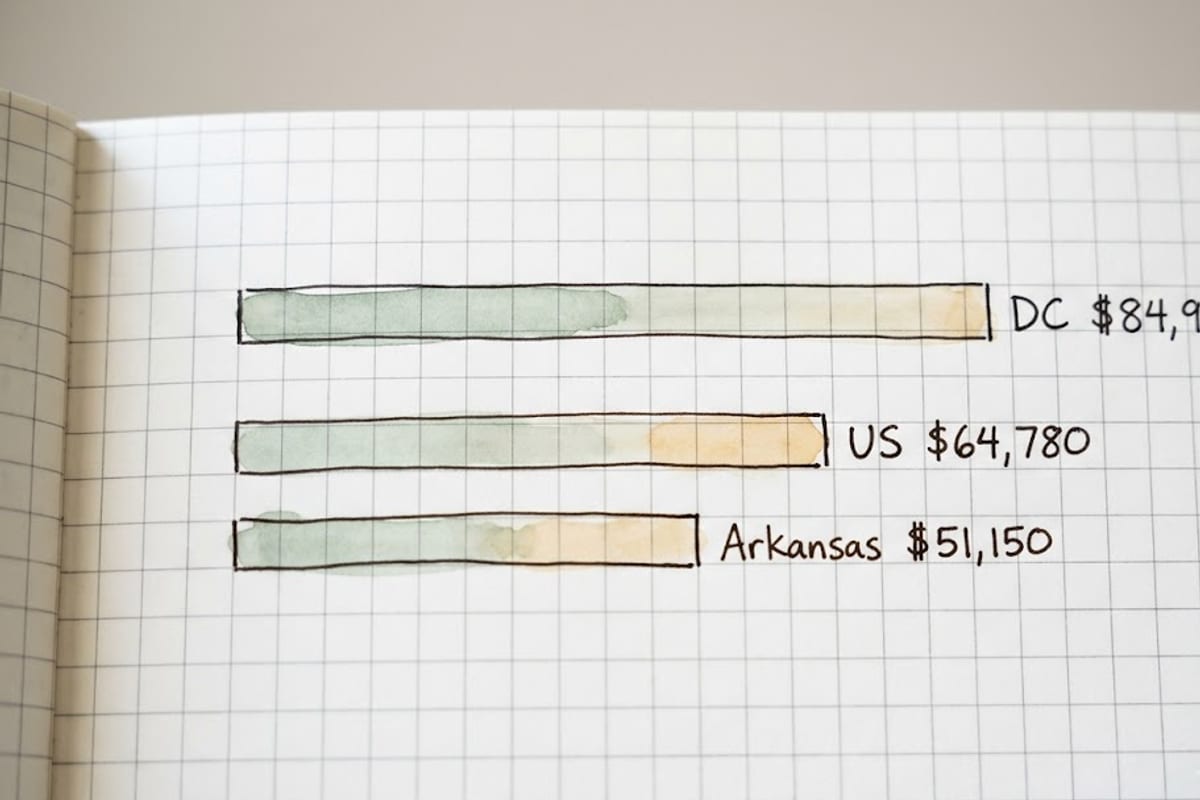
The spread is 1.66× — the second narrowest of the twelve trades, and that narrowness is itself informative.
Why the state spread is narrower here
Most trades are dominated by new construction, which booms and collapses regionally. HVAC has a large service and replacement base that exists wherever there are buildings, and it does not care much about the construction cycle.
A furnace fails in a recession. Equipment reaches end of life on its own schedule. That steady replacement demand puts a floor under the trade in states where new-build wages are low, which compresses the range.
Two seasons, not one
Roofers and concrete finishers have one working season and a dead winter in the northern states — which is why their annual means quietly average in months of no work.
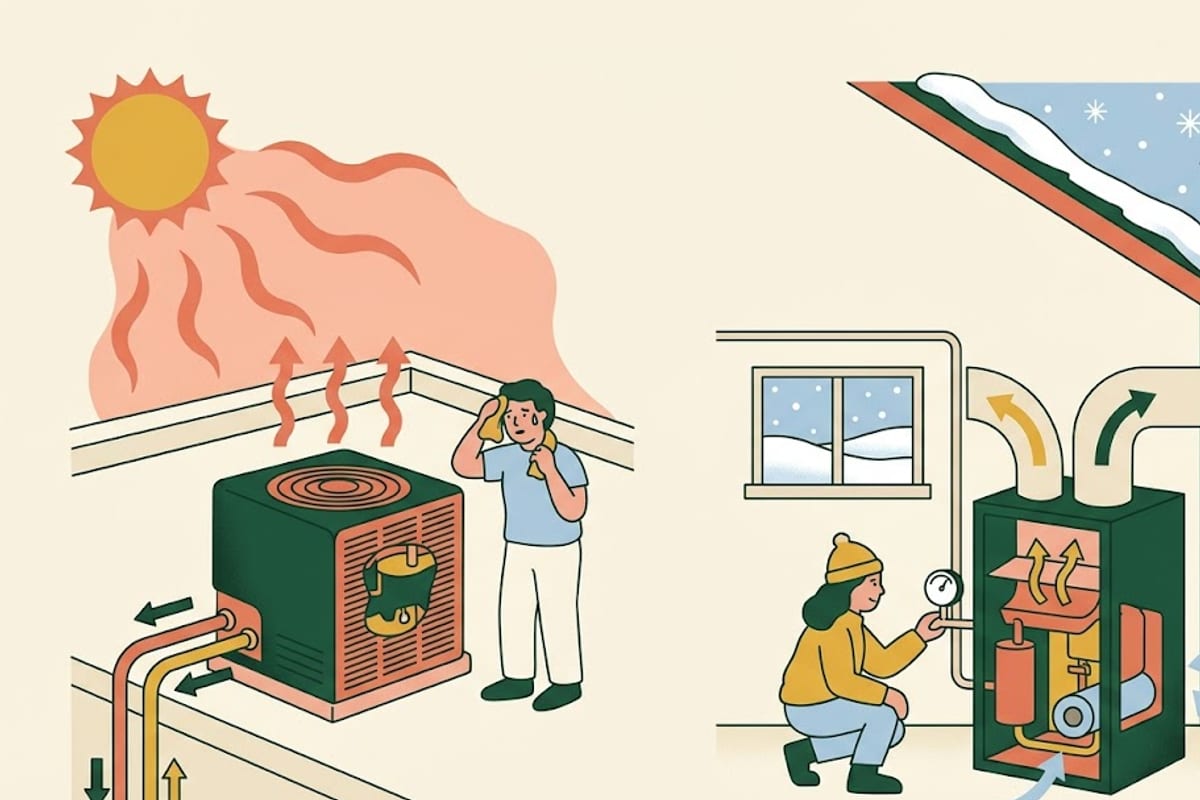
HVAC has two peaks: cooling calls in summer, heating calls in winter, with shoulder seasons in spring and autumn used for maintenance contracts and installations. Annual figures therefore describe the trade better here than in any outdoor trade on this list, and overtime is spread across the year rather than concentrated.
The shoulder months are when technicians take holiday and when employers run training.
EPA 608 is the gate
Handling refrigerant legally requires EPA Section 608 certification. It is not a state licence, it is federal, and there is no way to work on sealed systems without it.
| Type | Covers |
|---|---|
| Type I | Small appliances |
| Type II | High-pressure systems (most residential AC and heat pumps) |
| Type III | Low-pressure systems (large chillers) |
| Universal | All three |
Most technicians hold Universal. The exam is the practical entry barrier to the trade, and it is far lighter than a plumbing or electrical licence — which is part of why HVAC sits below those two on the wage table despite comparable technical demand.
Several states add their own contractor licence on top for anyone running their own work.
Where the money separates
Commercial and industrial work — rooftop units, chillers, building automation — pays clearly above residential service, and the gap widens with system size.
Controls and building automation is the highest-paid specialisation in the trade and increasingly a software skill as much as a mechanical one.
Refrigeration — supermarkets, cold storage, food processing — pays above comfort cooling and runs on 24-hour call schedules, because a failed system means spoiled stock.
Residential service has the most customer contact and is where running your own operation pays best, since the customer pays retail rather than a general contractor.
What the figure leaves out
The self-employed, as with every trade here. Overtime is inside the annual number but invisible in a quoted base rate, so the hourly conversion above often reads higher than a job advert.
And benefits are absent entirely — union packages in this trade commonly add 25 to 35% in pension, health and training contributions.
Heat pump adoption is the change worth watching: it moves work from two separate systems onto one, adds electrical knowledge to the required skill set, and is pulling the trade closer to the electrical trade in several states.
Every state figure is on its own page, and the full trade ranking puts this one in context.