$70,000 a year is $33.65 an hour, $1,346 a week, and $58,075 after federal income tax, Social Security and Medicare for a single filer with no state income tax. That is about $4,840 a month. In states with an income tax the monthly figure is roughly $4,560 to $4,750.
It is a good salary for one person. It is above what the median full-time worker earns, and it covers a basic cost of living for a single adult in all 50 states and the District of Columbia. It is a thin salary for a single parent, and it is not enough as the only income for a family of four in any state.
Above the middle
The Bureau of Labor Statistics reported median weekly pay of $1,251 for full-time wage and salary workers in the second quarter of 2026. At $1,346 a week, $70,000 is above that median and well below the 75th percentile of $1,915 a week, which puts it at roughly the 54th percentile of full-time workers.
It is close to the typical pay of workers in their prime earning years. BLS puts the median for full-time workers aged 35 to 44 at $1,436 a week and for ages 45 to 54 at $1,421, both about $74,000 a year. For workers aged 25 to 34 the median is $1,160 a week, about $60,300, so $70,000 at that age is clearly above average.
Among all jobs in the May 2025 occupational survey, including part-time ones, the median is $24.51 an hour. $70,000 is 37% higher.
The raise that gets taxed at 22%
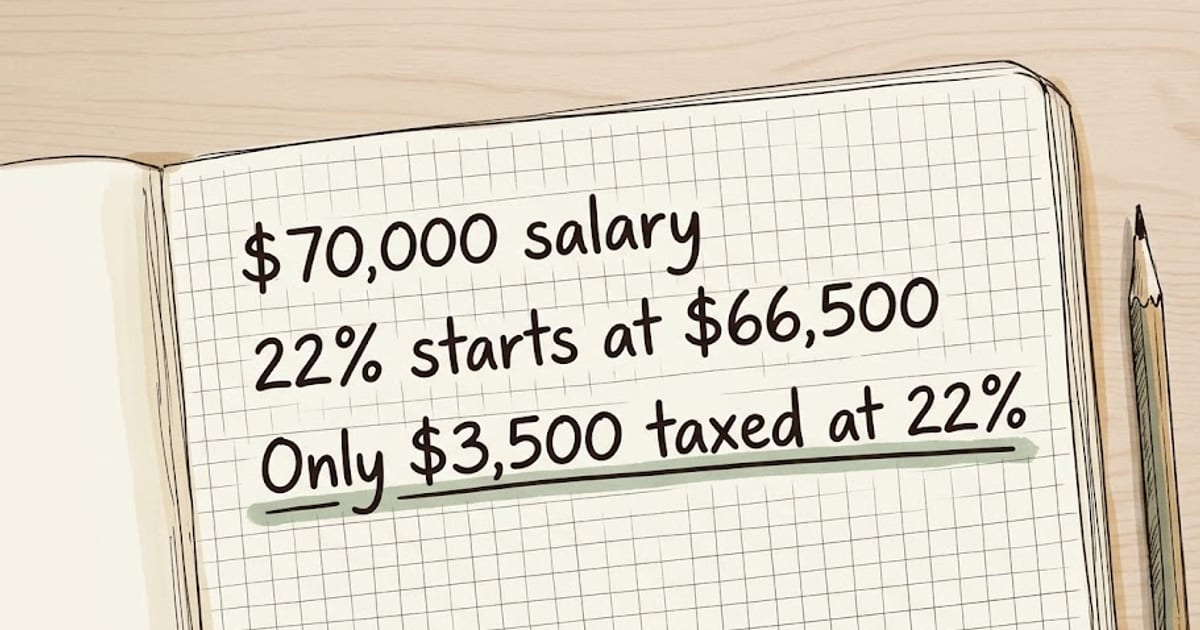
For a single filer in 2026, the 22% federal bracket starts at $50,400 of taxable income. Add the $16,100 standard deduction and that is $66,500 of salary. Every dollar earned above $66,500 is taxed at 22% federally plus 7.65% for Social Security and Medicare, before any state tax.
At $70,000, only the top $3,500 is in the 22% bracket. The rest of the income is taxed exactly as it was at lower salaries, so the total federal income tax is $6,570, an effective rate of 9.4% of gross.
The bracket matters more when comparing offers or raises. Here is what a $5,000 step adds at different points, for a single filer in a state with no income tax:
| Salary change | Extra federal tax | Extra FICA | Extra take-home | Share kept |
|---|---|---|---|---|
| $55,000 to $60,000 | $600 | $383 | $4,018 | 80% |
| $65,000 to $70,000 | $950 | $383 | $3,668 | 73% |
| $70,000 to $75,000 | $1,100 | $383 | $3,518 | 70% |
| $75,000 to $80,000 | $1,100 | $383 | $3,518 | 70% |

On a biweekly check, the move from $65,000 to $70,000 raises gross pay by $192.31 and net pay by $141.05. A traditional 401(k) contribution comes out before federal income tax, so every dollar put into it above $66,500 saves 22 cents of federal tax that year.
What it covers, household by household
The MIT Living Wage Calculator estimates the before-tax income needed for a basic budget in each state, counting rent, food, childcare, health care, transportation, other necessities and taxes, with nothing set aside for savings. The data below is from its February 2026 update.
| Household on one $70,000 salary | States where it covers the basic budget |
|---|---|
| One adult, no children | All 51 |
| One adult, one child | 3: Mississippi, Kentucky, Arkansas |
| Two adults (one working), two children | None |
For one adult the margin above a bare budget ranges from about $5,500 in Hawaii to about $29,400 in West Virginia. That margin is the money available for savings, travel, a better apartment or paying down debt.
For a single parent the story is different. MIT's budget for one adult with one child is $67,982 in Mississippi, $69,720 in Kentucky and $69,843 in Arkansas, the only three places under $70,000. It is about $74,400 in Texas, $83,000 in Florida and $111,400 in California. Childcare is the largest reason.
For one earner supporting a partner and two children, the lowest MIT budget is $74,198 in Arkansas. Tax credits and a married couple's $32,200 standard deduction reduce the tax bill well below the single-filer figures on this page, but they do not close a gap of that size in most states.
Single or married on the same salary
The tax figures above are for a single filer. A married couple filing jointly with one $70,000 salary pays noticeably less federal income tax because the 2026 joint standard deduction is $32,200 and the joint brackets are twice as wide.
| Filing situation, one $70,000 salary | Taxable income | Federal income tax | Take-home, no state tax |
|---|---|---|---|
| Single | $53,900 | $6,570 | $58,075 |
| Married filing jointly, no children | $37,800 | $4,040 | $60,605 |
| Married filing jointly, two children under 17 | $37,800 | $0 after the Child Tax Credit | about $64,645 |
The joint figure is $2,530 a year better than the single one on the same pay. With two qualifying children, the Child Tax Credit of $2,200 per child for 2026 is larger than the $4,040 of tax, so federal income tax falls to zero and Social Security and Medicare are the only federal deductions left.
That is part of why the household table above is less bleak for real families than it looks. It is also why a raise, a second job or a spouse's income changes the family's tax bill in ways the single-filer tables on salary pages do not show.
What to do with the margin
For one adult outside the most expensive states, $70,000 leaves roughly $850 to $1,700 a month after tax above MIT's basic budget. The usual order for that money is an emergency fund of three to six months of expenses, the full employer 401(k) match, high-interest debt, and then further retirement saving or a down payment fund.
Saving 15% of gross, the figure many retirement planners use for someone starting in their twenties or thirties, is $10,500 a year or $875 a month. On $70,000 in Texas or Ohio that fits alongside a $1,300 rent. In California or New York it competes directly with housing.
Take-home by state
| State | Take-home per year | Per month |
|---|---|---|
| Texas, Florida, Tennessee | $58,075 | $4,840 |
| Washington | $57,104 | $4,759 |
| Ohio | $56,584 | $4,715 |
| Arizona | $56,534 | $4,711 |
| Pennsylvania | $55,877 | $4,656 |
| North Carolina | $55,791 | $4,649 |
| Georgia | $55,065 | $4,589 |
| California | $54,777 | $4,565 |
| Illinois | $54,755 | $4,563 |
| New York | $54,558 | $4,547 |
These are single-filer figures before health premiums or retirement contributions. They include the payroll premiums some states withhold besides income tax: Washington's WA Cares and paid leave premiums ($971 a year here), California's disability insurance, New York's disability and paid family leave, and Pennsylvania's small unemployment deduction. The take-home calculator for $70,000 covers every state, and the difference between the top and bottom of this table is about $3,500 a year.
Rent and a home
Thirty percent of $70,000 is $1,750 a month for housing. MIT's monthly housing cost for one adult is below that in every state except California, New York, Massachusetts, the District of Columbia and Hawaii, where it runs from about $1,840 to $1,950. At $1,750, rent takes 36% of take-home pay in a no-income-tax state.
For buying, a 28% cap on the full monthly payment gives $1,633. At the 7.03% average 30-year rate reported by Freddie Mac for September 24, 2026, with 10% down and about 1.6% of the price a year for property tax and insurance, that supports a price of about $223,000.
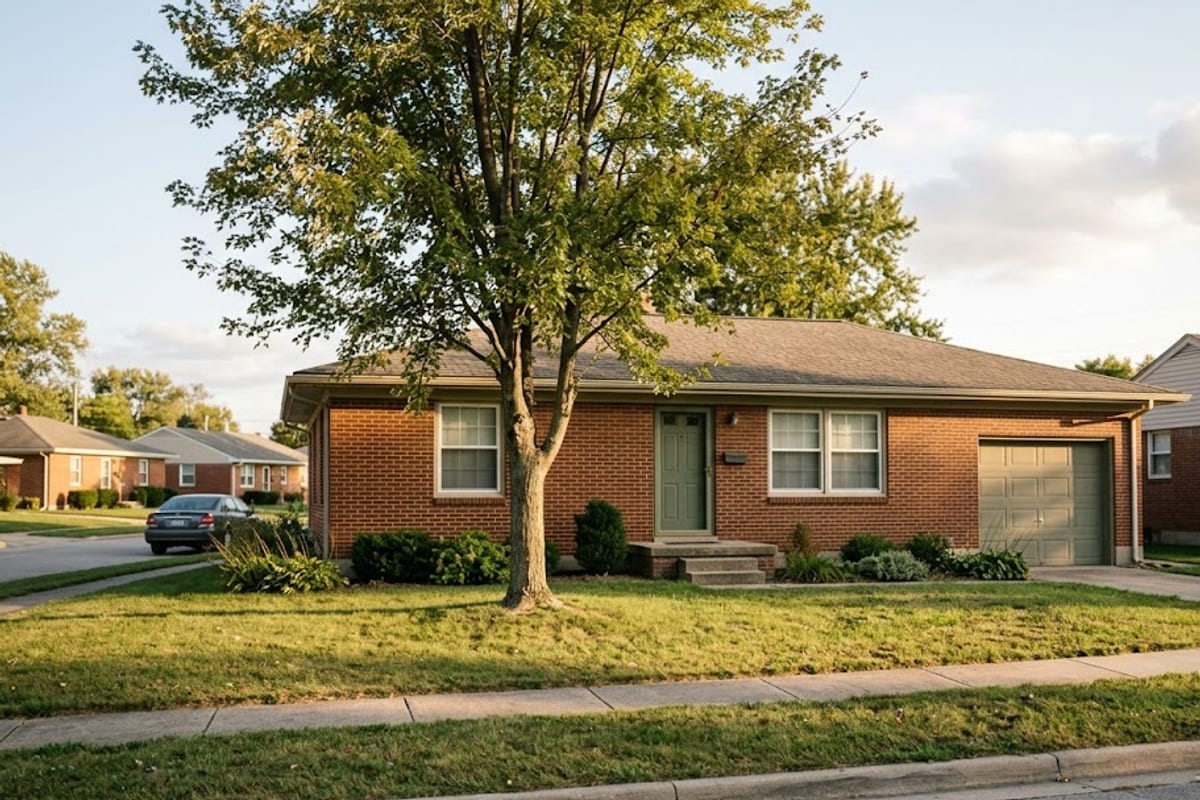
That is a starter house in much of the Midwest and South and a small condominium in many large metros. Lower rates would raise it; a state with high property tax would lower it.
Jobs that pay around $70,000
These May 2025 BLS medians convert to between $60,000 and $80,000 a year at full-time hours.
| Occupation | Median hourly | About per year |
|---|---|---|
| Social workers | $29.70 | $61,780 |
| Paralegals and legal assistants | $30.24 | $62,900 |
| Electricians | $30.38 | $63,190 |
| Licensed practical and vocational nurses | $30.96 | $64,400 |
| First-line supervisors, office and administrative support | $33.41 | $69,490 |
| Human resources specialists | $36.51 | $75,940 |
| Police and sheriff's patrol officers | $36.64 | $76,210 |
| Loan officers | $36.87 | $76,690 |
A $70,000 offer is above the national median for electricians, LPNs and paralegals and a little below it for HR specialists and police officers. Local pay for the same role can differ from these national figures by 20% or more.
Frequently asked questions
Is $70,000 a good salary for a single person? Yes. It is above the median for full-time workers and covers a basic budget in every state, with about $5,500 a year to spare over MIT's estimate even in Hawaii, the most expensive state.
How much is $70,000 a year per hour? $33.65 an hour at 40 hours a week and 52 weeks. At 45 hours a week it is $29.91. The hourly conversion page shows nearby rates.
Is $70,000 enough for a family? As a single income for two adults and two children, no state's basic budget is covered. As one of two incomes it usually is. The $60,000 page covers the two-earner case in more detail.
What does $70,000 a year pay biweekly? $2,692.31 gross, and $2,233.65 after federal tax, Social Security and Medicare in a state with no income tax.
Sources
- Bureau of Labor Statistics, Usual Weekly Earnings of Wage and Salary Workers, Second Quarter 2026, Tables 3 and 5.
- Bureau of Labor Statistics, Occupational Employment and Wage Statistics, May 2025, Table 1.
- MIT Living Wage Calculator, state data updated February 15, 2026.
- IRS Revenue Procedure 2025-32.
- Freddie Mac Primary Mortgage Market Survey, September 24, 2026.