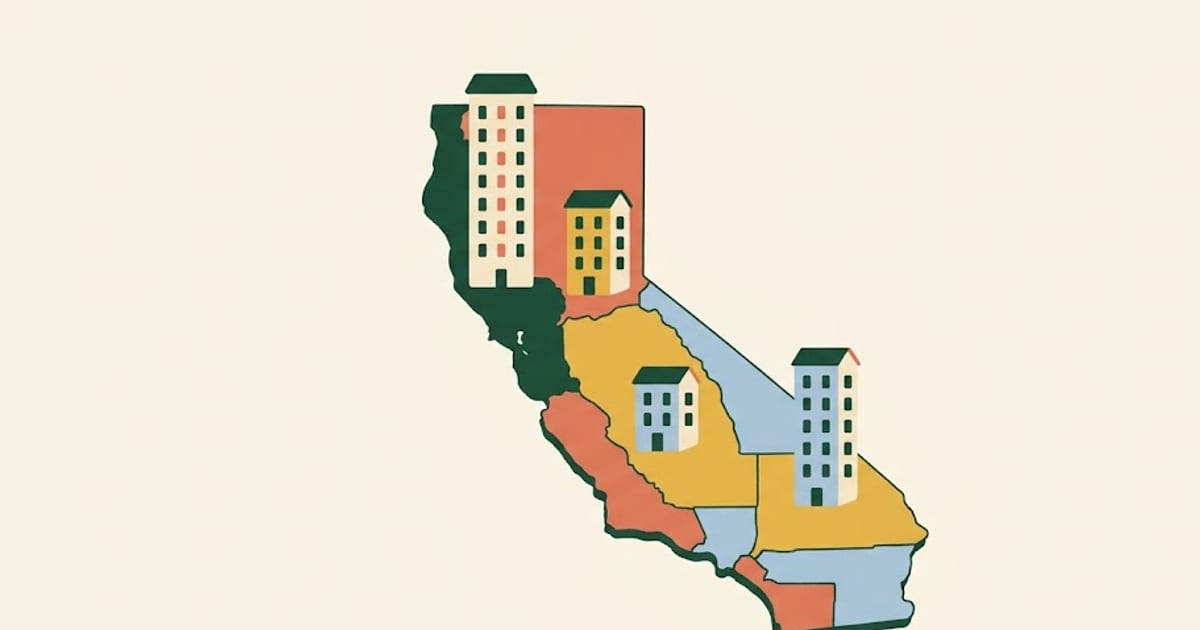
There is no single answer, because California is four housing markets that happen to share a state government.
| Region | 1-bed rent | Salary needed alone |
|---|---|---|
| Central Valley (Fresno, Bakersfield) | $1,300–1,600 | $70,000–75,000 |
| Sacramento, Inland Empire | $1,600–1,900 | $80,000–90,000 |
| San Diego, Orange County | $2,100–2,600 | $95,000–110,000 |
| Bay Area, coastal LA | $2,600–3,300 | $110,000–135,000 |
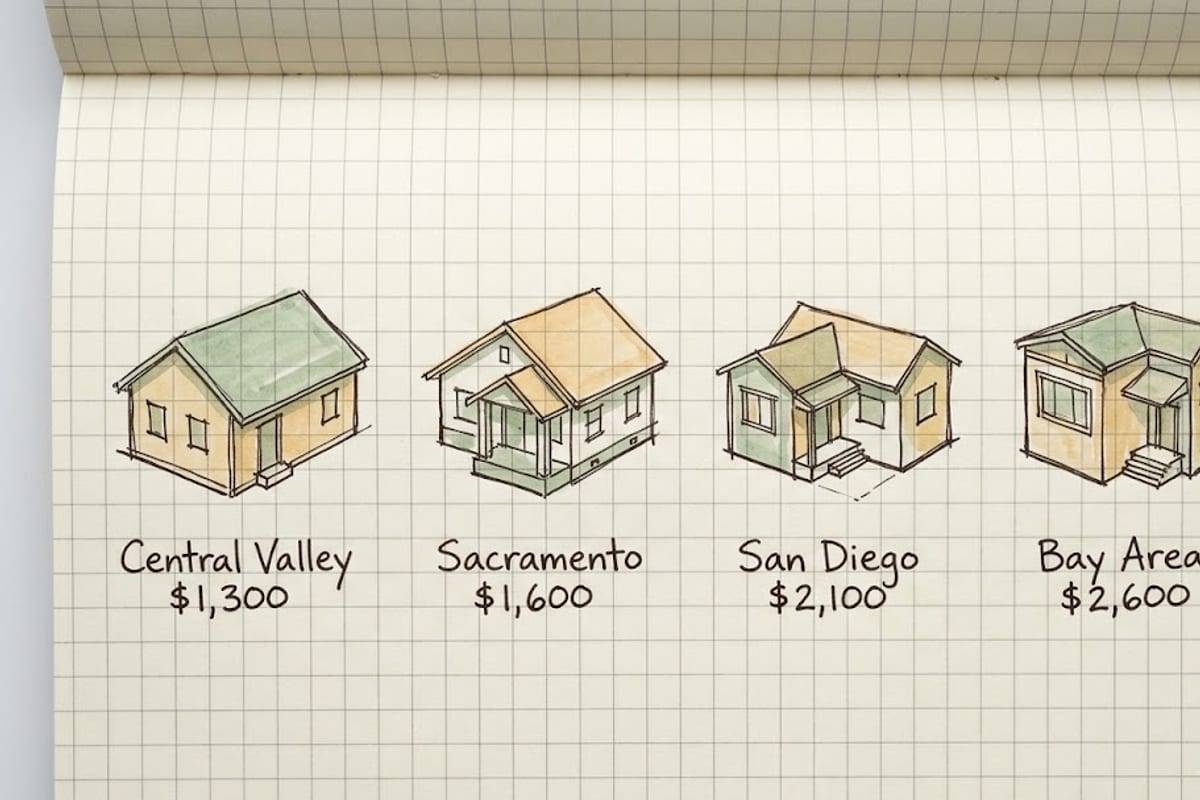
Those figures use the 30% housing rule for one person renting alone. Sharing a two-bedroom cuts the requirement by roughly 40%, and it is the single largest lever available — larger than any plausible raise.
The Central Valley and the Bay Area differ by more than most pairs of American states. Quoting one number for "California" is the error that makes the whole question unanswerable.
The income tax is the one no other state matches

California runs the most progressive state income tax in the country, with brackets reaching into the double digits at high incomes. For a typical worker the effective rate lands somewhere around 4 to 7% of gross — meaningful, and smaller than the housing difference between regions.
On $90,000, California state income tax runs roughly $4,500 to $5,500. Moving to a no-income-tax state saves that and, if the destination has cheap housing, saves several times more again on rent.
Sales tax is high as well, above 9% in many localities. Property tax is the exception: Proposition 13 caps assessment growth, so long-term owners pay far less relative to current value than owners in Texas or New Jersey — which is a large transfer from recent buyers to established ones and part of why the housing market behaves as it does.
What the trades pay there
California pays above the national mean for every trade tracked here, but not by as much as the housing costs would require:
| Trade | California | US mean |
|---|---|---|
| Electrician | $85,860 | $71,490 |
| Solar installer | $63,280 | $57,900 |
Electricians earn 20% above the national mean in California. Bay Area rents run well over 20% above the national median — closer to double. That gap is the practical reason trades workers concentrate in the inland regions and commute, and why California ranks high on wages and poorly on wages-after-housing.
Oregon and Washington pay electricians and plumbers more than California does with lower housing costs, which is worth knowing before treating California as the destination for trade wages.
What "needed" actually means
The figures above are comfort thresholds under the 30% rule, not survival. People live in the Bay Area on far less by sharing, commuting long distances, or spending 45 to 50% of income on housing — which is common enough in California to be the statistical norm rather than an exception.
That is a real choice rather than a mistake, but it has a cost: a budget at 50% housing has no capacity for a broken car, and that gap is where the financial stress actually sits.
Two things people underestimate
Utilities and insurance. Electricity rates are among the highest in the country, and home and auto insurance have risen sharply, with wildfire exposure making cover difficult in some areas.
The commute. Inland housing plus a coastal job is the standard compromise and it costs two to three hours a day plus fuel. Priced at the hourly rate the job pays, that is a large and invisible reduction in the effective wage.
The way to compare California against anywhere else is after tax and after housing, and it is worth checking what the trade pays state by state before assuming the high-wage state is the high-wage choice.