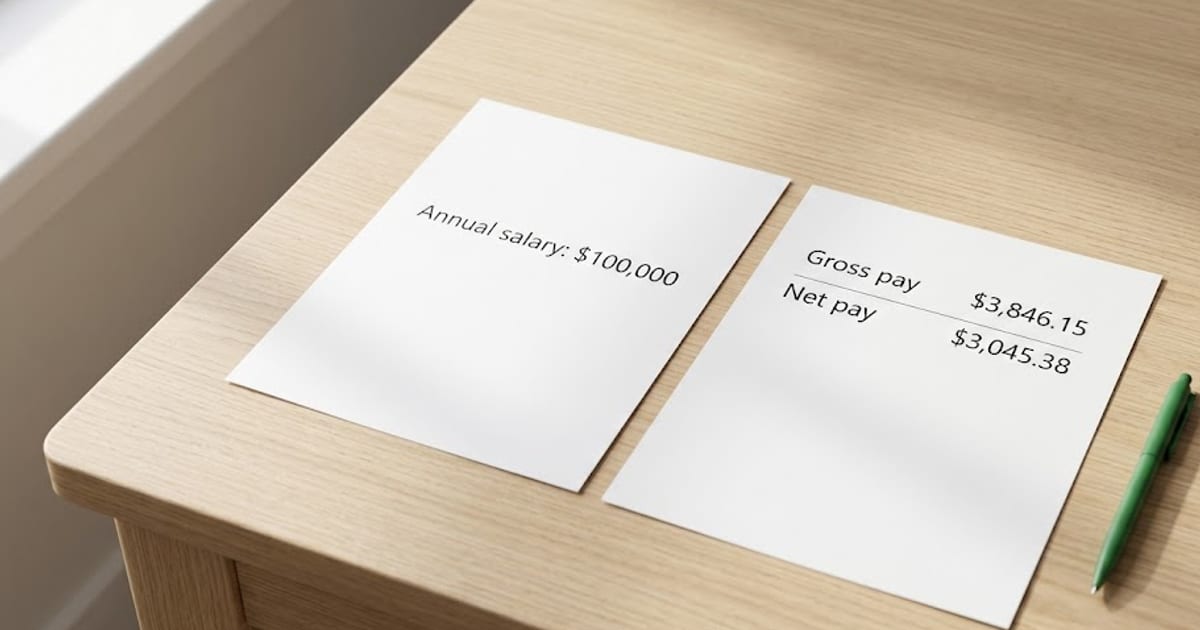
$100,000 a year is $48.08 an hour at 2,080 hours, or $1,923 a week. That is almost exactly the 75th percentile of full-time wage and salary workers in the United States, according to the Bureau of Labor Statistics for the second quarter of 2026. Three out of four full-time workers earn less.
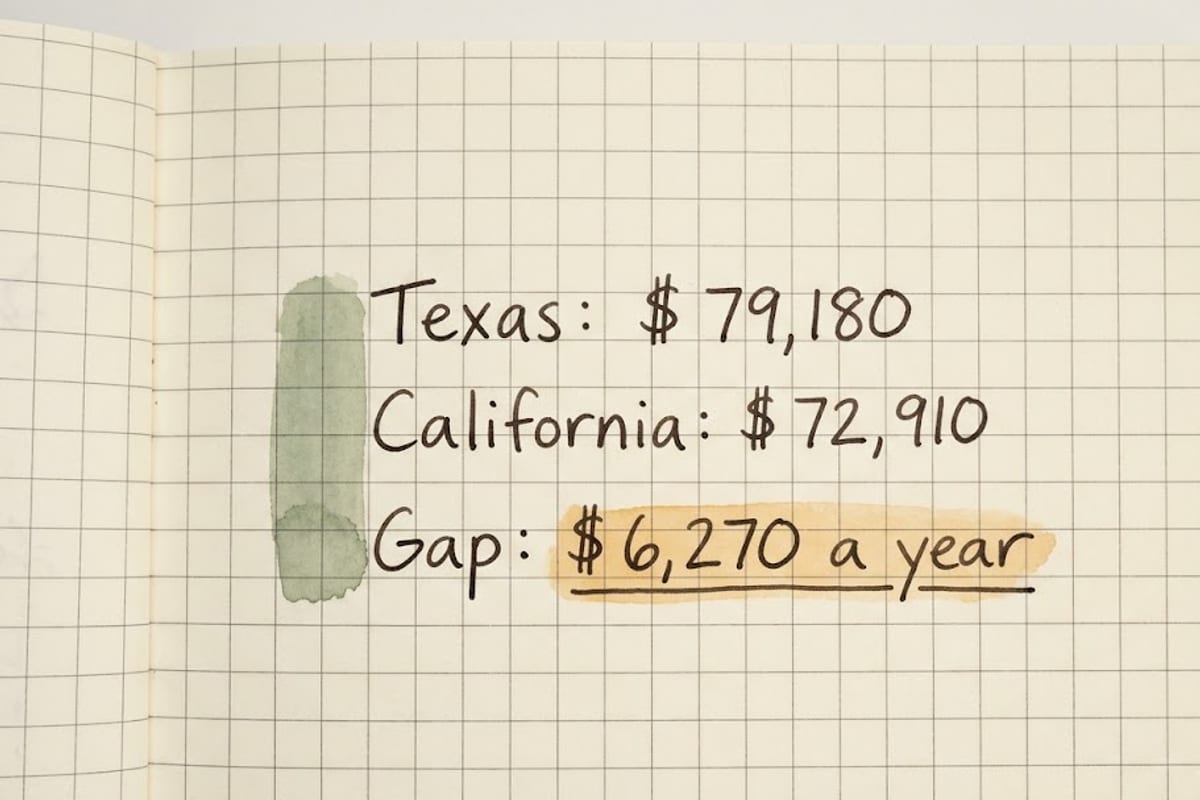
After federal income tax, Social Security and Medicare, a single filer keeps $79,180 in a state with no income tax, or $6,598 a month. In California the figure is $72,910. For one adult, $100,000 is a high salary in every state. For a family of four in which both parents work and pay for childcare, it covers a basic budget in only 6 of the 51 states and the District of Columbia.
Why six figures feels smaller than it sounds
Three things stand between a $100,000 offer and the money available to spend.
Federal tax and payroll tax take about 21%. For a single filer in 2026, taxable income after the $16,100 standard deduction is $83,900. That is still inside the 22% bracket, which runs to $105,700 of taxable income, so the top of this salary is taxed at 22% and the 24% bracket does not start until a salary of $121,800. Federal income tax comes to $13,170 and Social Security and Medicare to $7,650. Together they are 20.8% of gross.
The state can take another 6%. State income tax on $100,000 ranges from nothing in Texas, Florida, Washington and six other states to about $6,270 in California for a single filer.
| State | Take-home per year | Per month | Share of gross kept |
|---|---|---|---|
| Texas, Florida, Tennessee | $79,180 | $6,598 | 79.2% |
| Washington | $77,793 | $6,483 | 77.8% |
| Arizona | $76,889 | $6,407 | 76.9% |
| Ohio | $76,857 | $6,405 | 76.9% |
| Pennsylvania | $76,040 | $6,337 | 76.0% |
| Colorado | $75,048 | $6,254 | 75.0% |
| Georgia | $74,613 | $6,218 | 74.6% |
| Illinois | $74,375 | $6,198 | 74.4% |
| New York | $73,877 | $6,156 | 73.9% |
| California | $72,910 | $6,076 | 72.9% |
Washington has no income tax but withholds $1,387 a year at this salary for the WA Cares long-term care fund and paid family and medical leave, which is why it sits below Texas. Colorado, New York, Pennsylvania and California take similar payroll premiums for paid leave, disability or unemployment insurance on top of income tax, and the figures above include them.
Retirement saving and benefits come next. Contributing 10% to a 401(k) takes $10,000 from gross pay, although because it comes out before federal tax at 22% it reduces take-home by about $7,800. Health premiums add more for a family plan.
A single person in Texas saving 10% and paying typical premiums has roughly $5,800 to $6,000 a month to live on. That is comfortable. The same salary in a family in California starts from $6,076 and has far more to pay for.
One adult
MIT's Living Wage Calculator puts the basic before-tax budget for one adult with no children between $40,627 in West Virginia and $64,504 in Hawaii, as of its February 2026 update. $100,000 exceeds it everywhere by at least $35,000 a year.
In practical terms a single person on $100,000 can rent a one-bedroom at market rate in almost any metro, save 15% or more for retirement, and still have money for travel and a car. The 30% rule allows $2,500 a month in rent, above MIT's one-adult housing figure in every state. The main exceptions are the most expensive neighborhoods of New York, San Francisco, Boston and a few other cities, where market one-bedrooms often cost more than that. The Seattle salary breakdown works through one of those metros line by line, and the list of states with no income tax shows where the extra $6,000 or so of take-home comes from.
A family of four
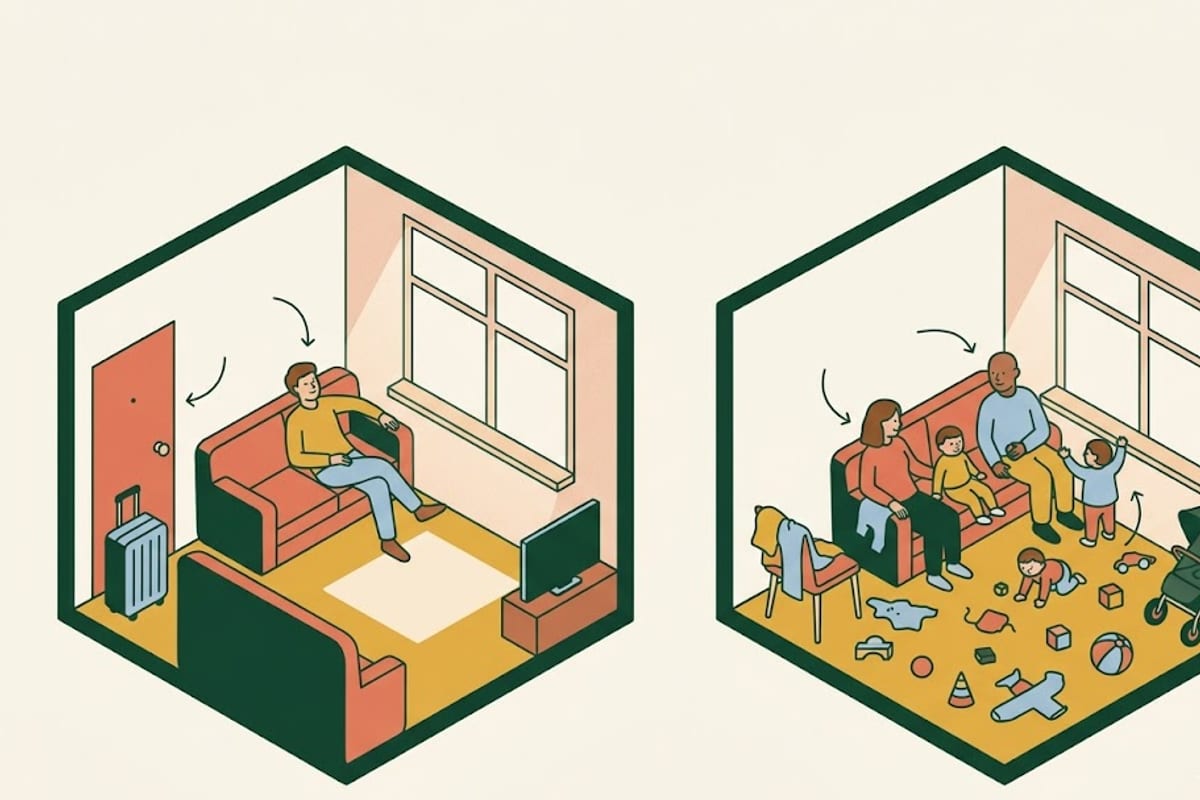
The same salary looks different when it supports two adults and two children. MIT's counts for the three family shapes, with $100,000 as the total income:
| Household | States where $100,000 covers MIT's basic budget |
|---|---|
| One adult, one child | 42 of 51 |
| Two adults (one working), two children | 47 of 51 |
| Two adults (both working), two children | 6 of 51 |
The single-parent budget exceeds $100,000 in Massachusetts ($121,175), Hawaii, the District of Columbia, California, Connecticut, New York, New Jersey, Colorado and Oregon. The one-earner family budget exceeds it only in California, Hawaii, Massachusetts and New York.
The two-earner family is the surprising row. When both parents work, MIT adds childcare for two children, and the six states where $100,000 still covers the result are Mississippi ($93,750), Kentucky, Arkansas, Tennessee, Louisiana and Alabama ($99,458).

| State | MIT childcare, two children, per year | Share of $100,000 |
|---|---|---|
| Texas | $19,178 | 19% |
| Ohio | $26,811 | 27% |
| California | $30,686 | 31% |
| Colorado | $35,327 | 35% |
| Massachusetts | $41,712 | 42% |
In Massachusetts, childcare for two young children costs more than rent in MIT's budget: $41,712 against $30,181 for housing. In California the two are about equal. That is the line that makes $100,000 an ordinary family income in much of the country.
Two things soften it. A married couple filing jointly pays much less federal tax on $100,000 than a single filer, because the joint standard deduction is $32,200 and the Child Tax Credit is $2,200 per child in 2026. Dependent-care accounts through an employer let a family pay part of childcare with pre-tax money. Neither changes the order of magnitude.
How far $100,000 is from the top
Six figures is often described as a high income, and for an individual it is: BLS puts the 75th percentile of full-time weekly pay at $1,915, just under $100,000 a year. The 90th percentile is $2,924 a week, or about $152,000 a year. So $100,000 is in the top quarter of full-time workers, and a salary about half again as large is needed to reach the top tenth.
For households the comparison is less flattering. The 2025 Census median household income was $87,460, and a household with two earners on ordinary wages can pass $100,000 without either person earning anything unusual. Two full-time workers at the individual median of $1,251 a week bring in about $130,000 together.
That gap is why the same salary can feel very different to two people. A single $100,000 earner compares their pay with coworkers and sees the top quarter. A family living on $100,000 compares their budget with neighbors who have two incomes and sees the middle.
It also explains a common pattern in the tax code. Several benefits phase out well above $100,000 for single filers, including the new deduction for qualified overtime pay, which begins to shrink only above $150,000 of modified adjusted gross income. At $100,000 a single filer still receives the full benefit of most of these provisions.
Buying a home on $100,000
Lenders commonly look for the full monthly payment, including property tax and insurance, to stay under 28% of gross income. On $100,000 that is $2,333 a month.
At the 7.03% average 30-year fixed rate Freddie Mac reported for September 24, 2026, with 10% down and around 1.6% of the price a year for tax and insurance, $2,333 supports a home of roughly $318,000. That is near the national middle of the market in many areas and well below it on either coast. A 20% down payment on the same home is about $64,000, which for many buyers is a harder limit than the monthly payment.
Jobs that pay about $100,000
From the BLS May 2025 occupational survey, at 2,080 hours a year:
| Occupation | Median hourly | About per year |
|---|---|---|
| Registered nurses | $46.90 | $97,550 |
| Dental hygienists | $47.16 | $98,090 |
| Management analysts | $48.97 | $101,860 |
| Project management specialists | $49.19 | $102,320 |
| Physical therapists | $49.40 | $102,750 |
| Financial and investment analysts | $49.40 | $102,750 |
| General and operations managers | $50.85 | $105,770 |
| Construction managers | $55.28 | $114,980 |
A $100,000 offer in any of these roles is close to the national median. Registered nurses reach it in many hospitals through shift differentials and overtime rather than base pay. For hourly roles, the national median is a starting point for negotiation; pay in large metros and in states such as California and Washington often runs above it.
Frequently asked questions
Is $100,000 a good salary? For one person it is a high salary in every state: top quarter of full-time workers and well above any basic budget. For a family with two working parents and childcare, it is a middle income in most states.
How much is $100,000 a year per hour? $48.08 an hour at 40 hours a week. At 50 hours a week of salaried work it is $38.46. The hourly calculator converts other rates.
Does $100,000 put me in the 24% tax bracket? No, for a single filer taking the standard deduction. The 24% bracket starts at $105,700 of taxable income, which is a salary of about $121,800. Your top rate on $100,000 is 22%.
What is $100,000 after taxes in my state? The $100,000 take-home calculator shows every state. For the step down, see is $80K a good salary.
Sources
- Bureau of Labor Statistics, Usual Weekly Earnings of Wage and Salary Workers, Second Quarter 2026, Table 5.
- Bureau of Labor Statistics, Occupational Employment and Wage Statistics, May 2025, Table 1.
- MIT Living Wage Calculator, state data updated February 15, 2026, including childcare and housing tables.
- IRS Revenue Procedure 2025-32.
- Freddie Mac Primary Mortgage Market Survey, September 24, 2026.