
Biweekly pay after taxes is your annual take-home pay divided by 26. On a $60,000 salary, a single filer keeps about $1,938 per paycheck in Texas, $1,866 in Pennsylvania, $1,845 in California and $1,825 in New York, before any retirement or health insurance deductions. Gross biweekly pay on the same salary is $2,307.69.
Because a year has 52 weeks and not 48, being paid every two weeks means 26 checks, two more than twice a month. That is why two months a year bring a third paycheck, and why biweekly pay looks smaller than half of a monthly salary.
Biweekly take-home by salary and state
| Annual salary | Gross per check | Texas | Pennsylvania | California | New York |
|---|---|---|---|---|---|
| $40,000 | $1,538 | $1,320 | $1,272 | $1,277 | $1,252 |
| $50,000 | $1,923 | $1,629 | $1,569 | $1,564 | $1,539 |
| $60,000 | $2,308 | $1,938 | $1,866 | $1,845 | $1,825 |
| $75,000 | $2,885 | $2,369 | $2,278 | $2,224 | $2,222 |
| $100,000 | $3,846 | $3,045 | $2,925 | $2,800 | $2,841 |
Single filer, 2026 federal brackets and $16,100 standard deduction, Social Security and Medicare, and state income tax, including California's state disability insurance withholding at the 2026 rate of 1.3%, New York's disability and paid family leave deductions, and Pennsylvania's 0.07% unemployment deduction. No 401(k), health insurance or local tax is taken out. Texas has no state income tax, so its column shows federal tax and FICA only. Each figure comes from the full take-home calculation for that salary and state, for example $75,000 after taxes in California.
Biweekly take-home for hourly pay
An hourly worker on a biweekly schedule is paid for 80 hours per check at 40 hours a week.
| Hourly rate | Gross per check (80 hrs) | Texas / Florida | California | New York |
|---|---|---|---|---|
| $20 | $1,600 | $1,369 | $1,324 | $1,298 |
| $25 | $2,000 | $1,691 | $1,620 | $1,596 |
| $30 | $2,400 | $2,012 | $1,912 | $1,894 |
Hours above 40 in a week are paid at time and a half and change these figures. Pages such as $25 an hour after taxes in New York show the annual, monthly and weekly equivalents.
How to calculate your own biweekly take-home
- Gross per check. Salary ÷ 26, or hourly rate × hours in the two weeks.
- Subtract pre-tax deductions. Traditional 401(k), health, dental and vision premiums, HSA and FSA contributions.
- Subtract federal income tax. Your employer uses the IRS Publication 15-T tables for a biweekly pay period together with your W-4. For a steady salary this comes close to your annual federal tax ÷ 26.
- Subtract Social Security and Medicare. 6.2% and 1.45% of gross pay minus any cafeteria-plan deductions. Social Security stops once your year-to-date wages pass $184,500.
- Subtract state and local tax where they apply.
- Subtract after-tax deductions. Roth contributions, union dues, garnishments.
The result is what lands in your account. If yours is lower than the table above, the difference is almost always in steps 2, 5 or 6. A full example of a $60,000 stub with a 401(k), health insurance and city tax is in why your paycheck is less than expected.
Why withholding is calculated per check
Your employer does not know what you will earn over the whole year, so federal withholding treats each paycheck as if it were repeated 26 times. The IRS percentage method in Publication 15-T annualizes the check, applies the annual tax tables, and divides the result back down to one pay period.
For a steady salary this lands very close to your real annual tax. It drifts when a single check is unusual. A biweekly check that includes a week of overtime is annualized as if every check were that large, so more tax is withheld from it than your actual rate would require. A check that includes a bonus may instead be taxed at the flat 22% supplemental rate. Both differences are settled when you file your return, but they explain why one check can look out of line with the others.
Social Security and Medicare are simpler: 7.65% of each check until year-to-date wages pass $184,500, after which Social Security stops and only the 1.45% Medicare remains. Someone earning $200,000 in 2026 sees their biweekly take-home rise for the last few checks of the year.
Biweekly, semimonthly and monthly compared
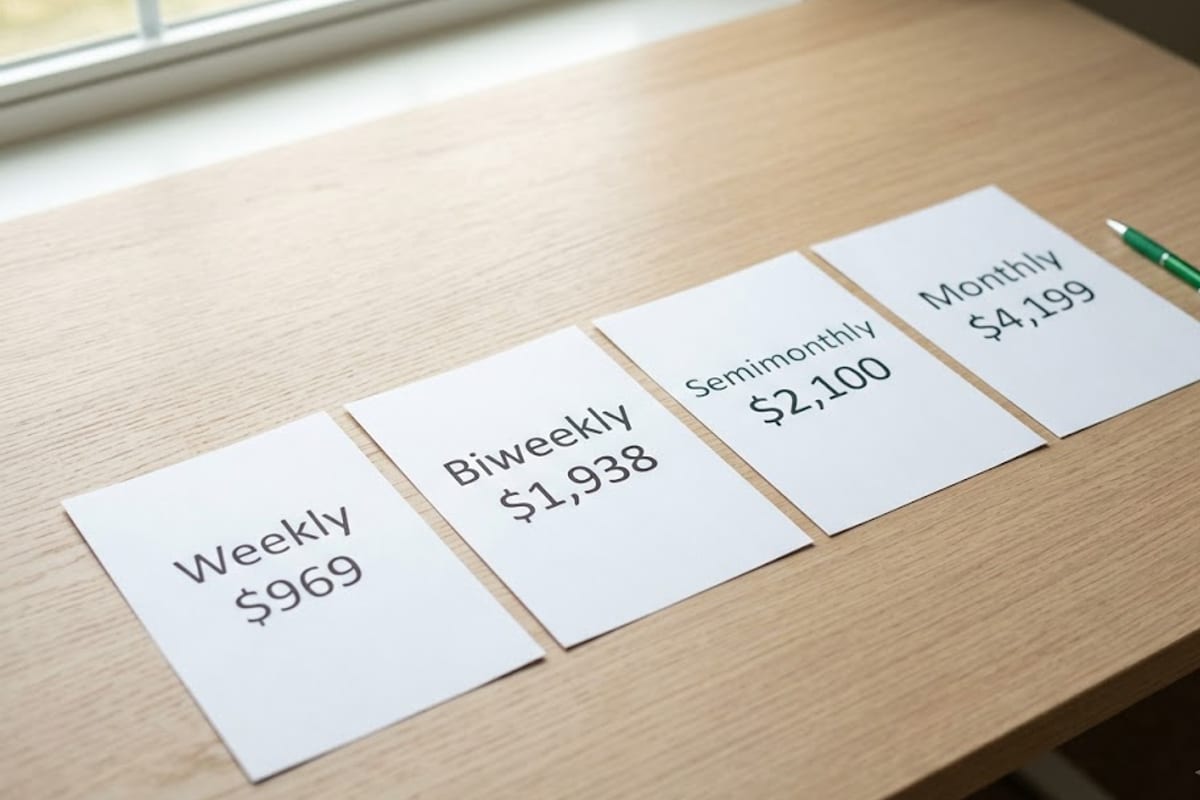
On a $60,000 salary in Texas, the annual take-home of $50,390 arrives in very different pieces depending on the pay schedule.
| Schedule | Checks a year | Take-home per check |
|---|---|---|
| Weekly | 52 | $969 |
| Biweekly | 26 | $1,938 |
| Semimonthly (1st and 15th) | 24 | $2,100 |
| Monthly | 12 | $4,199 |
Biweekly and semimonthly are easy to confuse. Semimonthly pay arrives on fixed dates, often the 1st and 15th or the 15th and last day, so there are always exactly two checks a month. Biweekly pay arrives on the same weekday every other week, so the dates move and some months get three. Each semimonthly check is larger, but the annual total is the same.
The months with three paychecks in 2026
Which months bring a third check depends on your first payday of the year.
| First Friday payday in 2026 | Three-paycheck months |
|---|---|
| January 2 | January (2, 16, 30) and July (3, 17, 31) |
| January 9 | May (1, 15, 29) and October (2, 16, 30) |
If your payday is a different weekday, count forward in steps of 14 days from your first payday of the year; any month that holds three of those dates is a three-paycheck month.
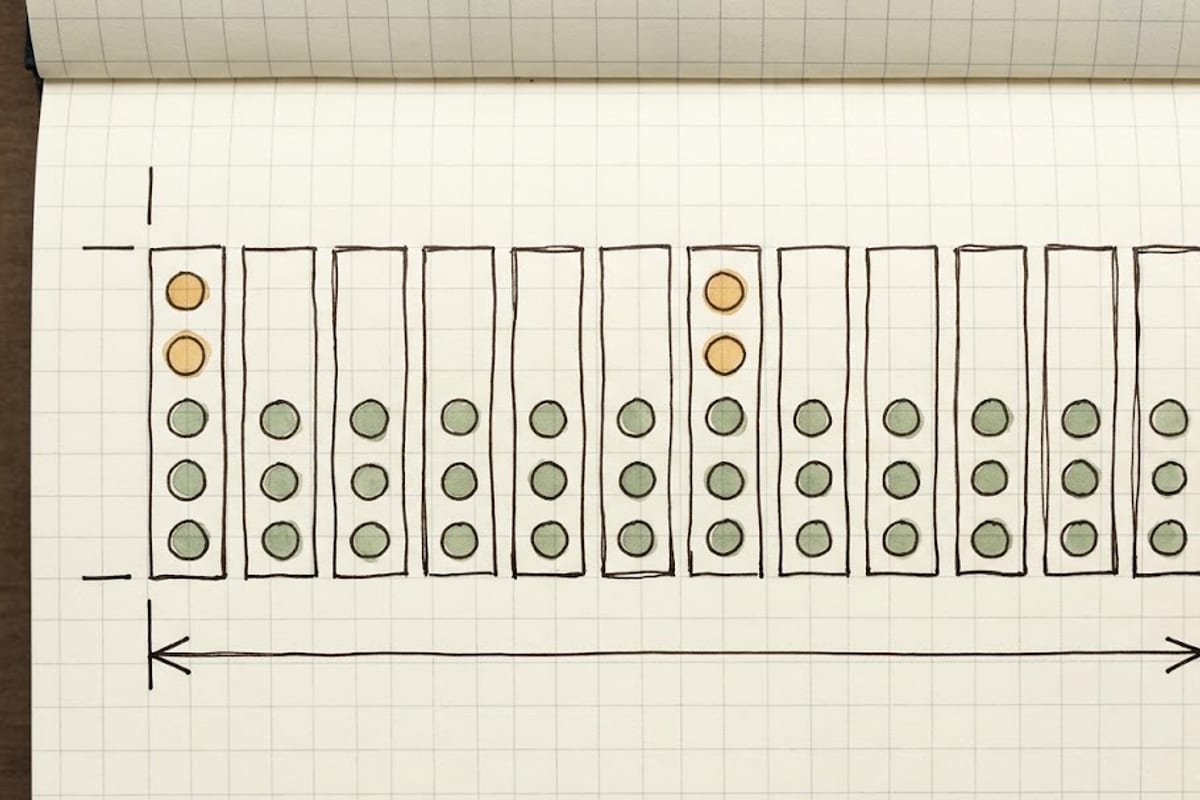
The simplest way to budget on a biweekly schedule is to plan monthly bills around two paychecks a month, which is your annual take-home ÷ 13, not ÷ 12. On $50,390 that is $3,876 a month to budget against, instead of $4,199. The two extra checks then arrive as a surplus that can go to savings, debt, or annual costs like insurance premiums.

When a year has 27 paychecks
A calendar year is 52 weeks and one day, or two days in a leap year. Every 11 years or so, that extra time adds up and a biweekly schedule fits 27 paydays into one calendar year.
For employers whose biweekly Friday schedule included January 2, 2026, the next payday after December 18, 2026 falls on Friday, January 1, 2027. That is a federal holiday, and many employers pay a day early when a payday lands on one, which would move that check to December 31, 2026. Either way, one of the two years gets a 27th check: 2027 if the payment is made in January, and 2026 if it is made on December 31. For the other common schedule, the one that started on January 9, 2026, the next 27-payday year is 2032.
A 27th paycheck matters in two ways:
- Salaried employees. Some employers divide the salary by 27 in those years, so each check is smaller and the annual total stays the same. Others keep dividing by 26, which means a year of pay slightly higher than the stated salary. Your offer letter or handbook will say which.
- Taxes. Federal withholding is calculated per check, so a 27th check is withheld like any other. Your annual income for tax purposes is whatever was paid in the calendar year, so the extra check raises that year's taxable income.
Frequently asked questions
How do I convert my annual salary to biweekly pay? Divide by 26. $60,000 ÷ 26 = $2,307.69 before tax.
How much is $1,500 biweekly per year? $1,500 × 26 = $39,000.
Is biweekly pay better than semimonthly? The annual total is identical. Biweekly gives two extra checks a year and a steady weekday payday; semimonthly gives larger checks on fixed dates that line up with monthly bills.
Why is my biweekly check not exactly my salary divided by 26? Because of deductions, or because your employer uses 26.1 or 27 as the divisor in some years. Hourly employees are paid for hours actually worked, which also varies.
Sources
- Internal Revenue Service: Rev. Proc. 2025-32 (2026 brackets and standard deduction); Publication 15-T (2026), Federal Income Tax Withholding Methods.
- Social Security Administration: 2026 contribution and benefit base, $184,500.
- U.S. Office of Personnel Management: 2026 and 2027 federal holidays.
- Payday dates calculated from the 2026 and 2027 calendars.